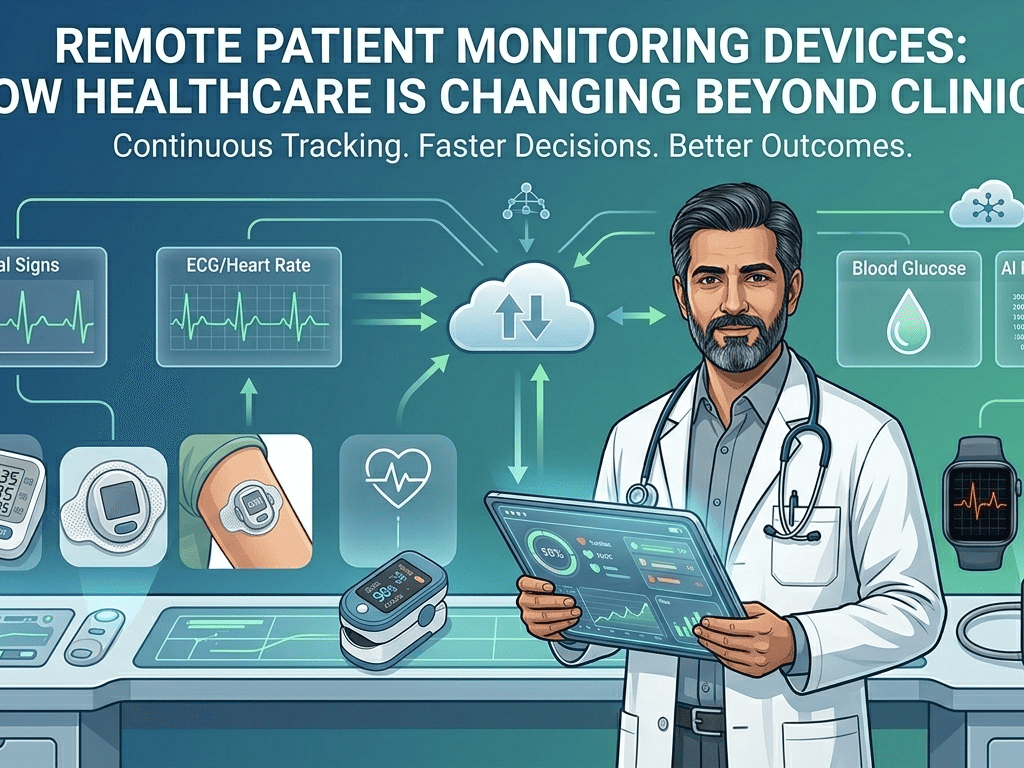

Healthcare is no longer limited to hospital walls. A patient can now be tracked, guided, and supported while sitting at home, at work, or even while traveling. That shift is powered by remote patient monitoring devices, and it is reshaping how doctors and patients connect.
Think about someone with high blood pressure or diabetes. Instead of waiting weeks for a checkup, their health data can now be shared with a doctor in real time. That changes not just treatment, but prevention itself.
So how do these devices actually work, and why are they becoming so important in modern healthcare?
What Are Remote Patient Monitoring Devices?
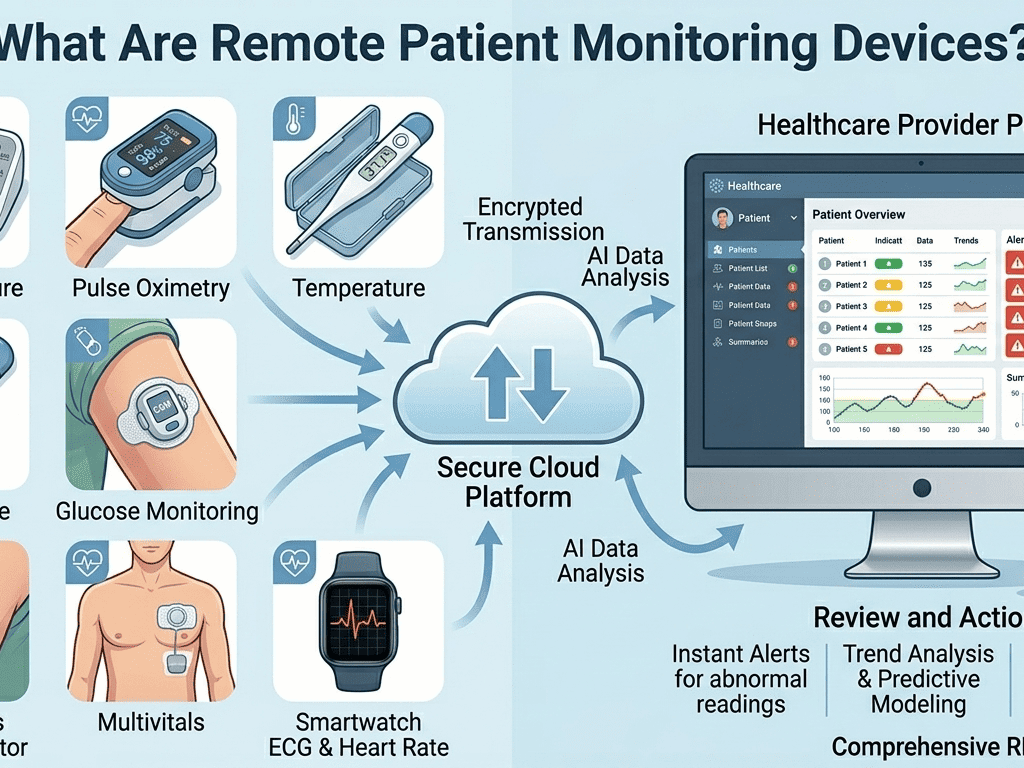
Remote patient monitoring (RPM) devices are digital tools that collect health data from patients outside traditional clinical settings and send it to healthcare providers for review.
These devices often track:
- Heart rate
- Blood pressure
- Blood glucose levels
- Oxygen saturation (SpO2)
- Sleep patterns
- Physical activity levels
- ECG readings
They connect through mobile apps, Bluetooth, Wi-Fi, or cellular networks.
Common examples include:
- Smartwatches like Apple Watch
- Fitness trackers like Fitbit Charge
- Cardiac monitoring systems from Philips Healthcare
- Cardiac rhythm devices from Medtronic
These tools are often paired with cloud platforms that store and analyze the collected data.
Why Remote Patient Monitoring Matters Today
Healthcare systems around the world are under pressure. Hospitals are crowded, chronic diseases are rising, and doctors are short on time.
RPM helps solve several of these problems:
1. Continuous health tracking
Instead of one-time clinic readings, doctors get ongoing data. This helps identify changes early.
2. Reduced hospital visits
Patients do not need to travel frequently for routine checks. This is especially useful for elderly or rural populations.
3. Faster medical response
If a reading goes outside safe limits, alerts can be sent immediately to healthcare providers.
4. Better chronic disease control
Conditions like diabetes, hypertension, and heart disease require constant monitoring, not occasional visits.
How Remote Patient Monitoring Works in Real Life
Let’s take a simple example.
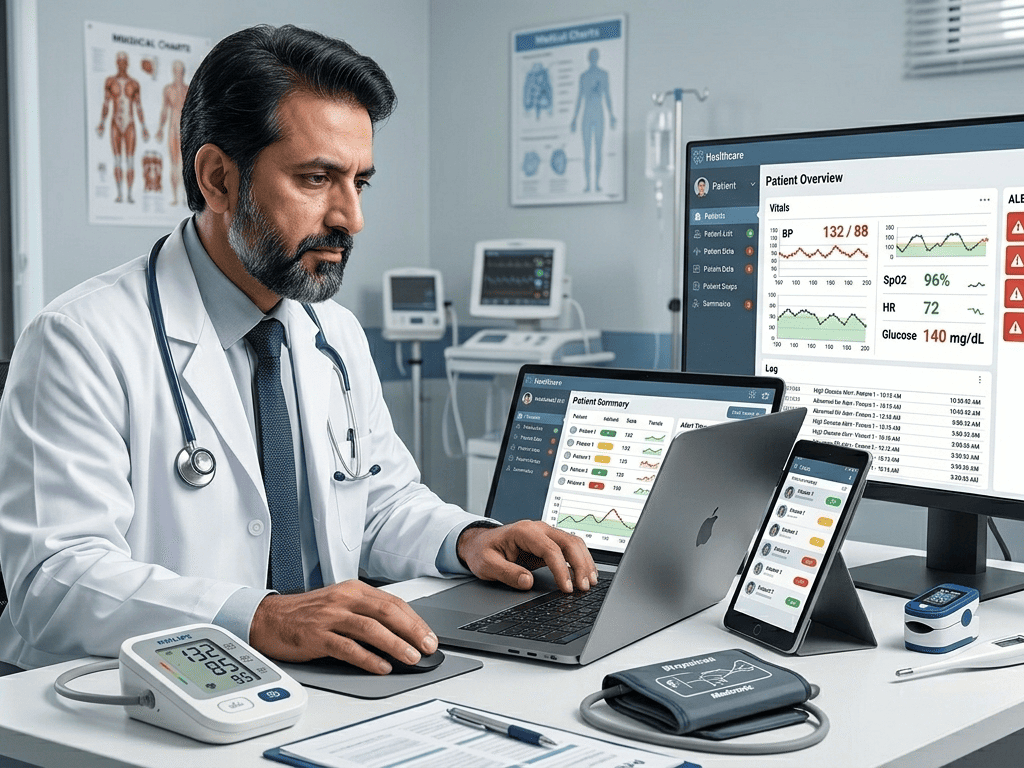
A patient with hypertension uses a digital blood pressure cuff at home. Each reading is automatically sent to a mobile app. That app syncs with the doctor’s dashboard.
If the readings remain stable, nothing changes. But if there is a sudden spike, the doctor can adjust medication or call the patient for immediate consultation.
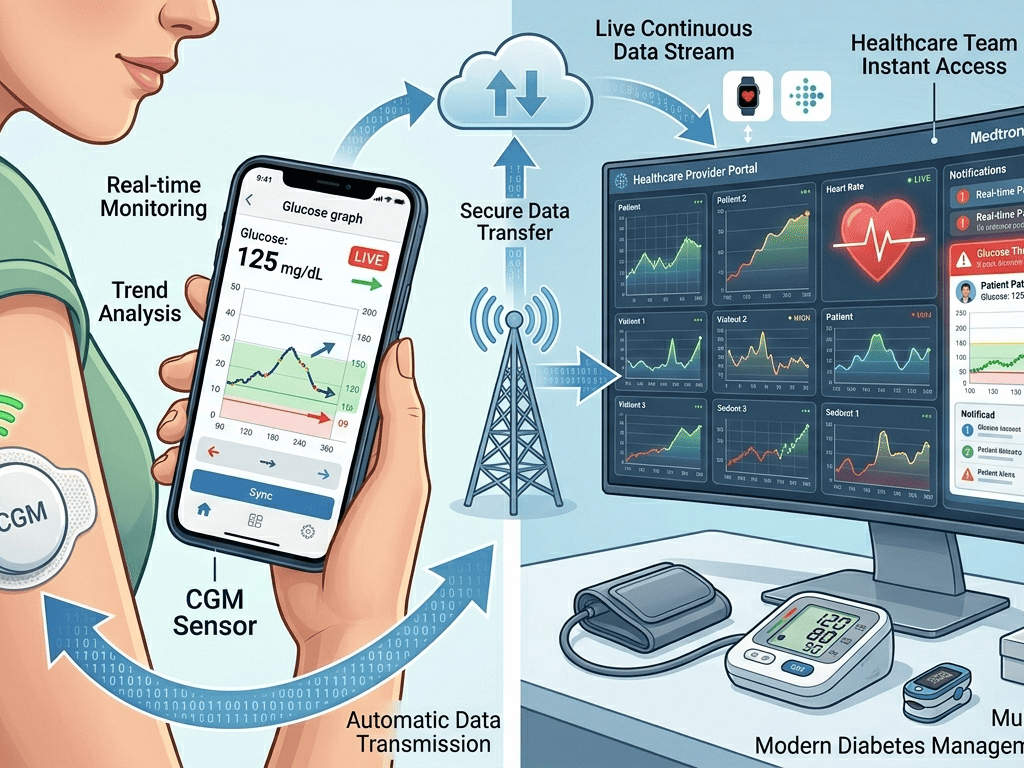
Another example is diabetes management. A glucose monitor tracks sugar levels throughout the day. Instead of guessing based on a single test, doctors can see patterns.
This is where systems like Apple Watch and medical-grade platforms from Medtronic play a role in combining lifestyle tracking with clinical insights.
Key Types of Remote Patient Monitoring Devices
RPM tools are not limited to one category. They cover a wide range of health needs.
1. Wearable devices
These are the most common and include smartwatches and fitness bands.
They track:
- Heart rate
- Sleep cycles
- Steps and movement
2. Vital sign monitors
These include devices like:
- Blood pressure monitors
- Pulse oximeters
- Thermometers
3. Cardiac monitoring devices
Used for patients with heart conditions. These can track ECG and detect irregular rhythms.
Companies like Philips Healthcare are widely involved in this space.
4. Glucose monitoring systems
Used by diabetic patients to track blood sugar levels continuously.
5. Multi-parameter monitoring kits
These combine several measurements in one system and are often used in clinical programs.
Benefits for Patients and Doctors
RPM creates value on both sides of healthcare.
For patients:
- Less travel and waiting time
- More control over personal health
- Early detection of issues
- Better understanding of body patterns
For doctors:
- Real-world patient data
- Reduced unnecessary visits
- Better decision-making
- Improved long-term treatment planning
A cardiologist, for example, can track heart patients daily instead of relying only on monthly checkups. That level of visibility changes treatment quality significantly.
Real-World Case Insight
A hospital in a mid-sized city introduced RPM for heart failure patients using wearable ECG devices.
Within a few months:
- Hospital readmissions dropped
- Patients reported better confidence in managing symptoms
- Doctors were able to adjust medication earlier based on alerts
This shows a shift from reactive treatment to proactive care.
Challenges of Remote Patient Monitoring
Even though the benefits are strong, RPM has limitations.
1. Data accuracy
Not all consumer devices are medically certified. This can affect reliability.
2. Privacy concerns
Health data is sensitive and must be protected with strong security systems.
3. Technology access
Some patients may not be comfortable using apps or devices.
4. Integration issues
Different healthcare systems may not always connect smoothly with RPM platforms.
These challenges are being addressed gradually, especially as healthcare standards evolve.
Where This Technology Is Heading
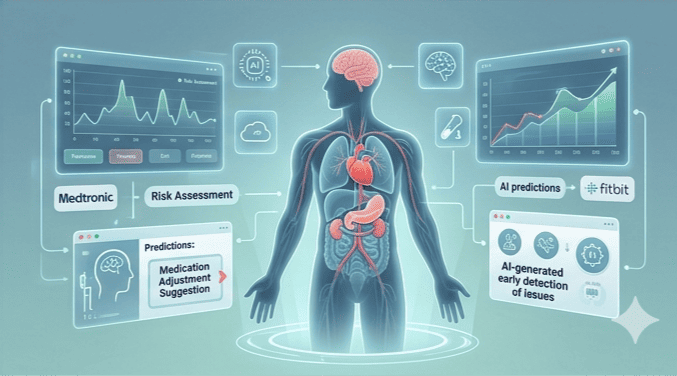
The future of remote monitoring is closely tied to artificial intelligence, IoT, and predictive analytics.
We are moving toward systems that:
- Predict health risks before symptoms appear
- Automatically adjust treatment suggestions
- Combine lifestyle and clinical data into one view
Devices from companies like Medtronic and Philips Healthcare are already integrating smarter analytics into their systems.
Wearables like Fitbit Charge are also expanding beyond fitness tracking into medical insights.
Actionable Tips for Patients Using RPM Devices
If you are using or planning to use remote monitoring tools, keep these points in mind:
- Check if the device is clinically validated
- Keep your device synced regularly
- Do not ignore alerts or unusual readings
- Share data consistently with your healthcare provider
- Maintain manual logs for backup if needed
Questions to Think About
- Would you feel more confident managing a chronic condition with constant health tracking?
- Do you think wearable devices should replace regular hospital checkups in some cases?
- How much trust would you place in AI-driven health alerts?
Internal Linking Suggestions
- /blog/telehealth-benefits
- /blog/wearable-health-technology
- /blog/digital-health-trends-2026
- /blog/chronic-disease-management-tools
External Authority References
- World Health Organization (WHO) – Digital health initiatives
- U.S. Food and Drug Administration (FDA) – Medical device regulations and RPM guidelines
Conclusion
Remote patient monitoring devices are changing healthcare from a reactive system into a continuous support model. Instead of waiting for symptoms to get worse, doctors can respond earlier and more precisely.
For patients, it means more control and less uncertainty. For healthcare providers, it means better data and more informed decisions.