

Heart disease remains one of the leading causes of death worldwide, making early diagnosis, accurate risk assessment, and timely treatment more important than ever. In recent years, AI in cardiology has emerged as a powerful technology that helps healthcare professionals detect cardiovascular diseases earlier, interpret complex medical data more efficiently, and personalize treatment for individual patients. From analyzing electrocardiograms (ECGs) to supporting AI for heart attack prediction, artificial intelligence is reshaping the future of cardiovascular medicine.
Unlike traditional software that follows fixed rules, artificial intelligence learns from large volumes of clinical data. Using machine learning and deep learning algorithms, AI can recognize patterns in medical images, patient histories, laboratory results, wearable device data, and heart rhythm recordings that may be difficult for humans to identify. This allows cardiologists to make faster, more informed decisions while improving patient outcomes.
As healthcare systems continue adopting digital technologies, AI is becoming an important component of precision medicine, preventive cardiology, and remote patient monitoring.
What Is AI in Cardiology?
AI in cardiology refers to the use of artificial intelligence technologies to support the prevention, diagnosis, treatment, and management of cardiovascular diseases. AI systems analyze large amounts of structured and unstructured healthcare data to identify trends, predict risks, and assist clinicians in clinical decision-making.
Rather than replacing cardiologists, AI functions as a clinical decision support tool. It processes information quickly and highlights findings that may require further evaluation by healthcare professionals.
Modern AI solutions are used in various aspects of cardiac care, including:
- Electrocardiogram (ECG) interpretation
- Echocardiography analysis
- Cardiac CT and MRI imaging
- Heart rhythm monitoring
- Risk prediction for cardiovascular disease
- Remote patient monitoring
- Personalized treatment recommendations
These applications help improve diagnostic accuracy while reducing the workload on healthcare providers.
Why Artificial Intelligence Matters in Heart Care
Cardiovascular diseases often develop silently over many years. Conditions such as coronary artery disease, heart failure, atrial fibrillation, and hypertension may not produce noticeable symptoms until serious complications occur.
AI helps address this challenge by identifying subtle warning signs before they become clinically obvious.
Some important reasons AI is transforming cardiology include:
- Earlier disease detection
- Faster image interpretation
- Improved diagnostic consistency
- Better prediction of cardiovascular events
- Personalized treatment planning
- Continuous monitoring through wearable devices
- Efficient use of healthcare resources
These capabilities contribute to more proactive rather than reactive patient care.
How AI Works in Cardiology
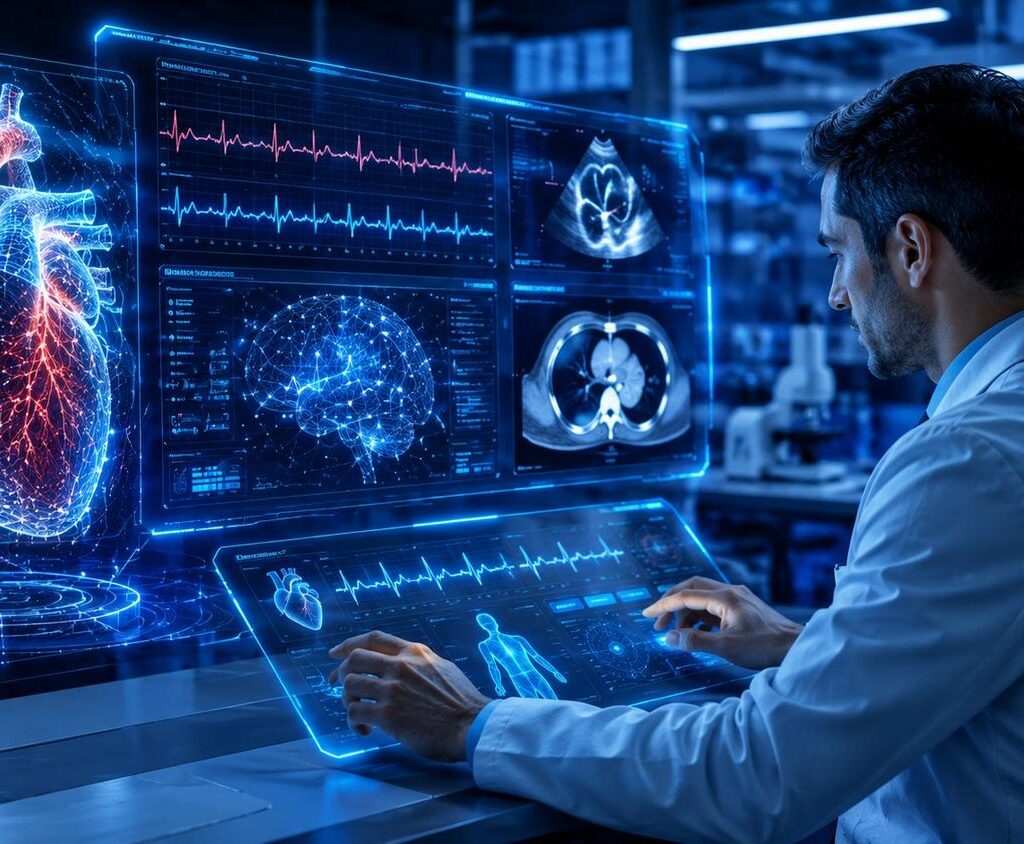
Artificial intelligence combines multiple technologies to analyze cardiovascular information.
Machine Learning
Machine learning algorithms learn from historical patient data to predict future outcomes. By studying thousands of patient records, these models identify relationships between risk factors and cardiovascular diseases.
For example, machine learning can estimate a patient’s likelihood of developing heart failure or experiencing a heart attack within a specific time frame.
Deep Learning
Deep learning uses artificial neural networks that automatically recognize complex patterns in medical images and physiological signals.
Deep learning models are commonly used to analyze:
- ECG recordings
- Echocardiography images
- Cardiac MRI scans
- Coronary CT angiography
- Chest X-rays
These systems can detect abnormalities with remarkable speed and consistency.
Natural Language Processing (NLP)
Many valuable clinical details exist within physician notes and electronic health records rather than structured databases.
Natural Language Processing extracts meaningful information from clinical documentation, helping AI systems build a more complete picture of a patient’s cardiovascular health.
Predictive Analytics
Predictive analytics combines clinical variables, laboratory results, demographic information, and imaging findings to estimate future cardiovascular risk.
This technology supports preventive cardiology by identifying high-risk patients before severe complications develop.
AI for Heart Attack Prediction
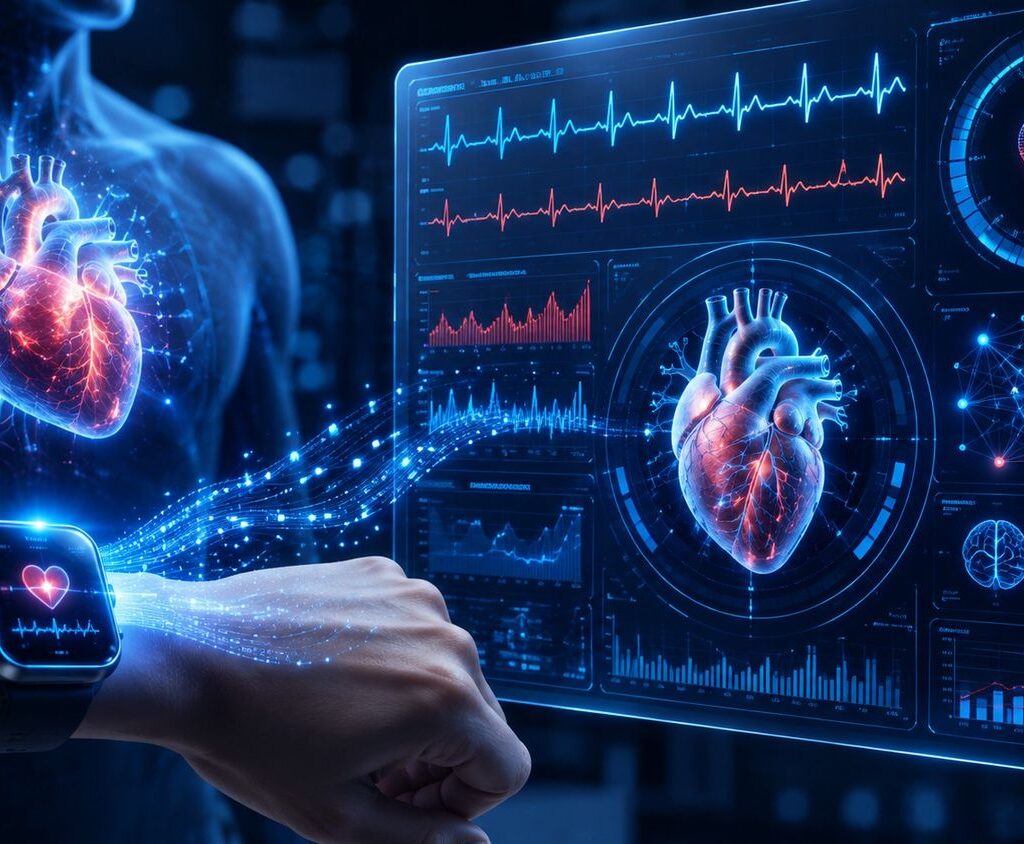
One of the most promising applications of artificial intelligence is AI for heart attack prediction.
A heart attack, also known as myocardial infarction, occurs when blood flow to the heart muscle becomes blocked. Early identification of patients at increased risk allows healthcare providers to recommend preventive interventions before a life-threatening event occurs.
Traditional risk assessment relies on factors such as:
- Age
- Blood pressure
- Cholesterol levels
- Smoking history
- Diabetes
- Family history
- Body mass index
AI enhances these assessments by incorporating additional sources of information, including:
- ECG signals
- Medical imaging
- Laboratory biomarkers
- Medication history
- Lifestyle factors
- Wearable device data
- Previous hospital admissions
- Genetic information, where available
By analyzing these diverse datasets simultaneously, AI models can identify subtle combinations of risk factors that conventional scoring systems may overlook.
As a result, physicians can intervene earlier through lifestyle modifications, medication adjustments, additional testing, or closer monitoring.
Major Applications of AI in Cardiology
Artificial intelligence supports nearly every stage of cardiovascular care.
ECG Interpretation
Electrocardiograms are one of the most commonly performed cardiac tests.
AI-powered ECG analysis can rapidly identify:
- Atrial fibrillation
- Bradycardia
- Tachycardia
- Heart block
- Ventricular arrhythmias
- Ischemic changes
Automated interpretation helps clinicians review ECGs more efficiently while reducing diagnostic variability.
Medical Imaging Analysis
Cardiac imaging generates enormous amounts of data.
AI assists radiologists and cardiologists by evaluating:
- Echocardiograms
- Cardiac MRI
- CT angiography
- Nuclear cardiology scans
The technology can automatically measure cardiac chamber size, calculate ejection fraction, detect valve abnormalities, and identify coronary artery disease.
Heart Failure Management
Patients with heart failure often require continuous monitoring.
AI systems analyze data from:
- Smartwatches
- Implantable cardiac devices
- Remote monitoring platforms
- Blood pressure monitors
- Weight measurements
These systems may detect early signs of worsening heart failure before symptoms become severe, allowing timely intervention and reducing hospital admissions.
Arrhythmia Detection
Many cardiac rhythm disorders occur intermittently, making diagnosis challenging.
AI continuously analyzes heart rhythm data collected from wearable devices or ambulatory ECG monitors to identify irregular heartbeats that might otherwise go unnoticed.
This improves the detection of conditions such as atrial fibrillation, which is associated with an increased risk of stroke.
Personalized Treatment Planning
Every patient has unique clinical characteristics.
AI supports personalized medicine by helping physicians determine which therapies are most likely to benefit an individual patient based on their medical history, imaging findings, laboratory results, and predicted risk profile.
Benefits of AI in Cardiology
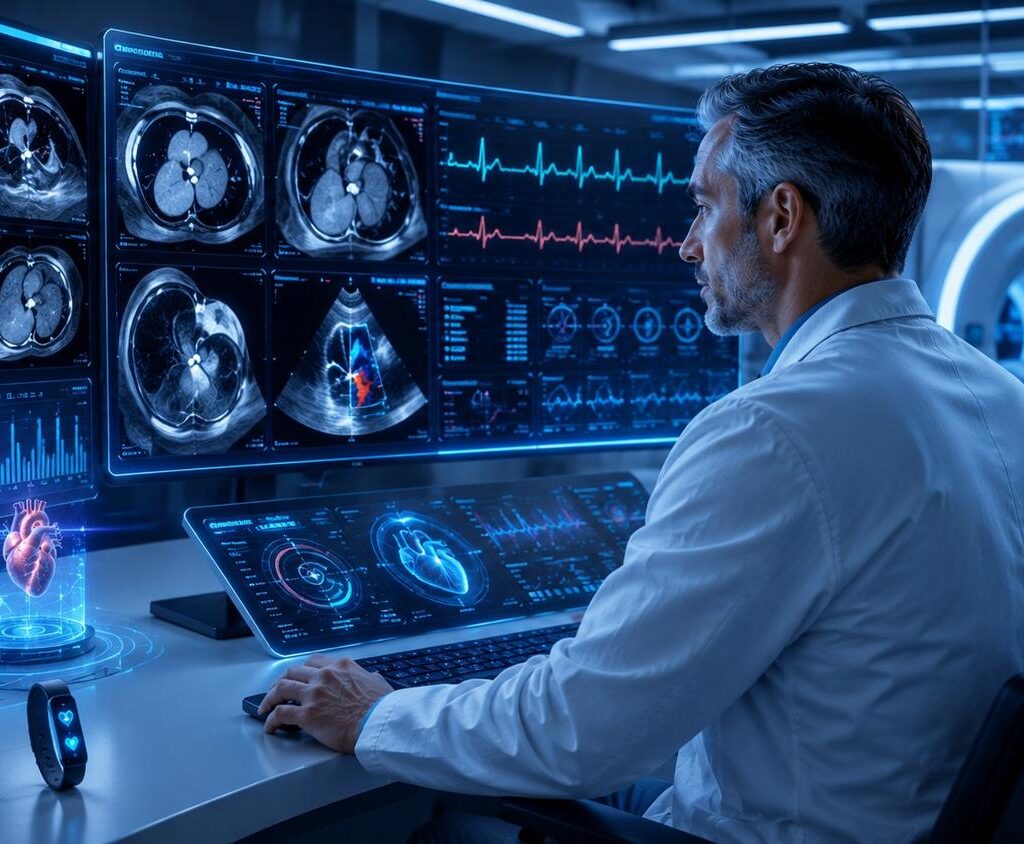
Artificial intelligence is improving cardiovascular care by helping clinicians make more informed decisions while enhancing patient outcomes. Some of the most significant benefits include:
1. Earlier Disease Detection
AI can identify subtle changes in ECGs, cardiac imaging, and laboratory data before symptoms become obvious. Detecting heart disease earlier allows physicians to begin treatment sooner, potentially preventing serious complications.
2. Improved Diagnostic Accuracy
Even experienced cardiologists may interpret complex cases differently. AI provides consistent analysis by comparing patient data with thousands or even millions of previous cases, helping reduce diagnostic variability.
3. Faster Clinical Decision-Making
Modern hospitals generate enormous volumes of medical data every day. AI rapidly processes this information, allowing cardiologists to prioritize urgent cases and spend more time on patient care instead of manual data analysis.
4. Personalized Cardiovascular Care
Every patient has different risk factors, genetics, lifestyle habits, and medical histories. AI supports personalized medicine by recommending treatment strategies based on each patient’s unique profile rather than relying solely on generalized guidelines.
5. Better Remote Monitoring
Wearable devices such as smartwatches and portable ECG monitors continuously collect cardiovascular data. AI analyzes this information in real time and can alert healthcare providers when abnormal heart rhythms or signs of heart failure are detected.
6. Reduced Healthcare Costs
By preventing unnecessary hospital admissions, avoiding duplicate diagnostic tests, and detecting diseases earlier, AI has the potential to improve healthcare efficiency while reducing long-term treatment costs.
Challenges and Limitations of AI in Cardiology
Although AI offers remarkable opportunities, several challenges must be addressed before it becomes fully integrated into routine cardiovascular care.
Data Quality
AI systems are only as reliable as the data used to train them. Poor-quality, incomplete, or biased datasets may reduce prediction accuracy and affect patient safety.
Privacy and Data Security
Cardiovascular AI relies heavily on electronic health records, imaging databases, and wearable device data. Healthcare organizations must protect patient privacy through strong cybersecurity measures and compliance with healthcare regulations.
Algorithm Bias
If training datasets do not adequately represent different ages, ethnicities, or patient populations, AI predictions may be less accurate for certain groups. Researchers continue working to improve fairness and reduce bias in AI models.
Clinical Validation
Before an AI system is adopted in hospitals, it must undergo rigorous clinical testing to demonstrate safety, reliability, and effectiveness in real-world healthcare settings.
Human Oversight
AI should support, not replace, clinical judgment. Final decisions about diagnosis and treatment remain the responsibility of qualified healthcare professionals.
The Role of AI in Preventive Cardiology
Preventive cardiology focuses on reducing the risk of cardiovascular disease before serious events occur. AI strengthens preventive care by identifying individuals at high risk and enabling earlier interventions.
For example, AI may recommend additional cardiovascular screening for patients with multiple risk factors, such as high blood pressure, elevated cholesterol, diabetes, obesity, smoking, or a family history of heart disease.
By recognizing these patterns early, healthcare providers can recommend lifestyle changes, medications, or further testing before a heart attack or stroke occurs.
Future Trends in AI in Cardiology
Artificial intelligence continues to evolve rapidly. Several emerging technologies are expected to shape the future of cardiovascular medicine.
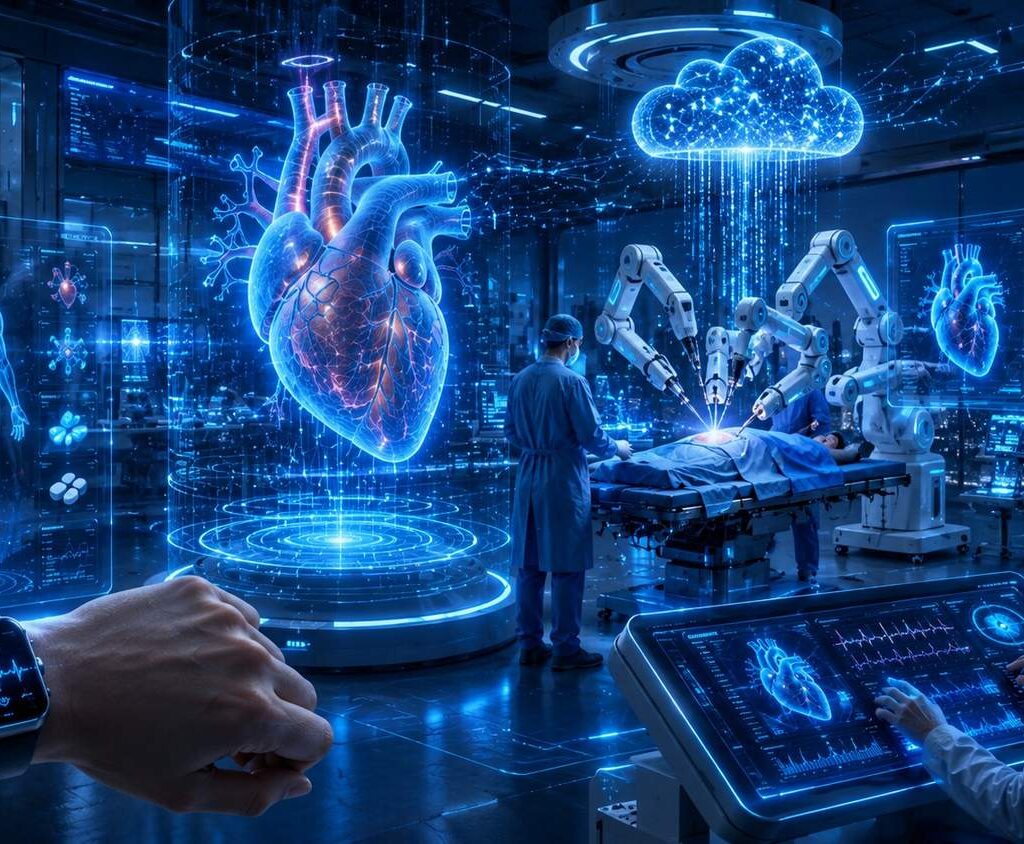
Digital Twins
Researchers are developing “digital twins,” virtual models of a patient’s heart created using imaging, physiological data, and AI. These models may help physicians simulate treatment options before performing procedures.
Generative AI for Clinical Documentation
Generative AI can summarize patient visits, prepare clinical notes, and organize electronic health records, allowing cardiologists to spend more time interacting with patients.
Robotics and AI-Assisted Procedures
AI is increasingly being integrated into robotic-assisted cardiac procedures, improving precision during minimally invasive interventions while supporting physicians with real-time guidance.
Continuous Wearable Monitoring
Future wearable devices may continuously monitor heart rhythm, blood pressure, oxygen saturation, sleep quality, and physical activity. AI will analyze this data to detect cardiovascular problems long before symptoms appear.
Precision Medicine
As genomic sequencing becomes more accessible, AI will combine genetic information with clinical and lifestyle data to recommend highly personalized prevention and treatment strategies.
Best Practices for Implementing AI in Cardiology
Healthcare organizations should follow several best practices when adopting AI technologies:
- Use clinically validated AI systems supported by scientific evidence.
- Maintain high-quality and standardized patient data.
- Protect patient privacy with strong cybersecurity measures.
- Regularly monitor AI performance and update algorithms.
- Provide training for physicians and healthcare staff.
- Keep human clinicians involved in every critical decision.
- Continuously evaluate patient outcomes after AI implementation.
These practices help ensure that AI improves patient care while maintaining safety and trust.
Frequently Asked Questions
No. AI is designed to assist cardiologists by analyzing data, identifying patterns, and supporting clinical decisions. Diagnosis and treatment decisions should always be made by qualified healthcare professionals.
Many AI models have demonstrated excellent performance in research studies. However, accuracy varies depending on the quality of data, patient population, and clinical validation. AI should complement, not replace, established medical assessment.
AI can analyze ECG recordings, echocardiograms, cardiac CT and MRI scans, laboratory results, electronic health records, wearable device data, medication history, and lifestyle information.
Yes. Smartwatches and portable ECG devices can continuously monitor heart rhythm and other health metrics. When combined with AI, they can help detect irregular heartbeats and support early intervention.
AI can improve patient care when it is clinically validated, regularly monitored, and used under physician supervision. Strong data security and regulatory compliance are essential for safe implementation.
One of the greatest advantages is its ability to detect cardiovascular risk earlier, enabling timely treatment and potentially preventing serious events such as heart attacks or heart failure.
Conclusion
Artificial intelligence is transforming cardiovascular medicine by enhancing diagnosis, improving risk prediction, supporting personalized treatment, and enabling continuous patient monitoring. AI in cardiology is no longer a futuristic concept. It is becoming an essential component of modern healthcare, helping clinicians interpret complex medical data with greater speed and accuracy.
One of its most impactful applications is AI for heart attack prediction, where machine learning models analyze clinical data, medical imaging, ECG signals, and wearable device information to identify individuals at increased cardiovascular risk before life-threatening events occur. This proactive approach supports preventive cardiology and allows healthcare providers to intervene earlier through lifestyle changes, medication, and targeted therapies.
Despite challenges related to data quality, privacy, algorithm bias, and clinical validation, the future of AI in cardiology is promising. Advances in deep learning, predictive analytics, digital twins, remote patient monitoring, and precision medicine are expected to further improve patient outcomes and reshape the delivery of cardiovascular care.
As AI continues to evolve, the most successful healthcare systems will combine advanced technology with the expertise, empathy, and clinical judgment of cardiologists. Together, this partnership has the potential to deliver safer, more efficient, and more personalized heart care for patients around the world.
You have not enough Humanizer words left. Upgrade your Surfer plan.