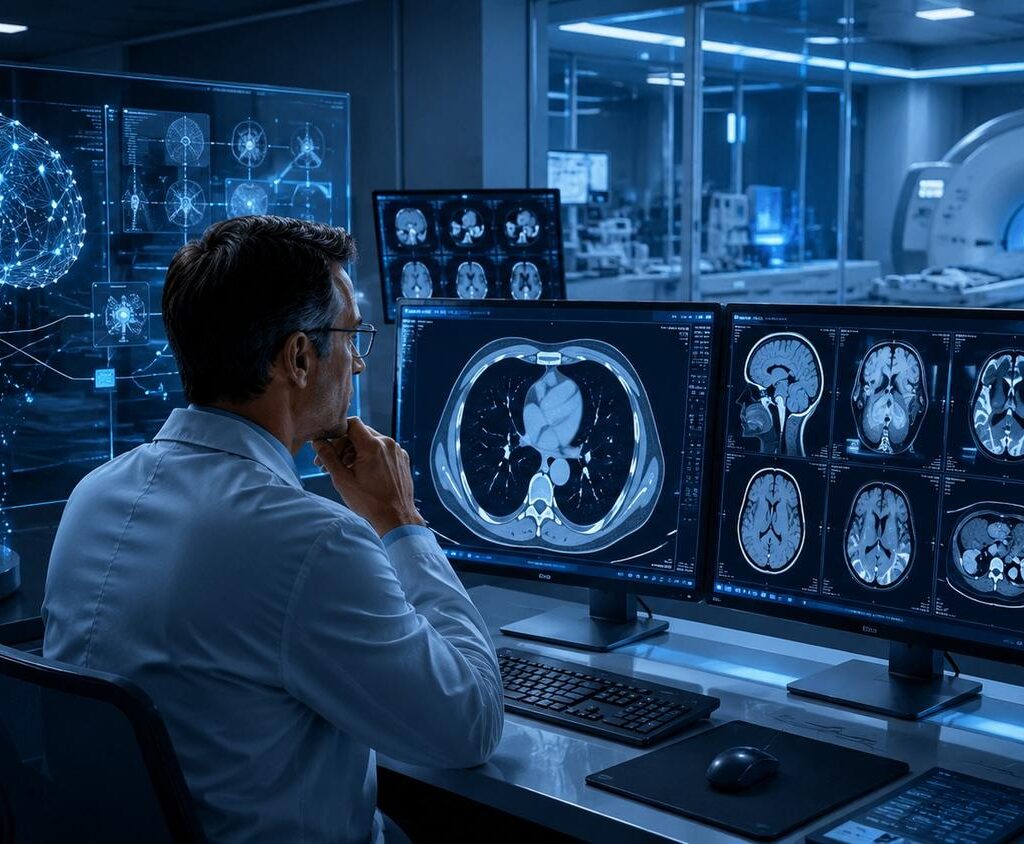

Medical imaging has become one of the most important pillars of modern healthcare. Every day, radiologists interpret thousands of X-rays, CT scans, MRI scans, ultrasounds, mammograms, and PET scans to help diagnose diseases, guide treatments, and monitor patient progress. As imaging volumes continue to grow, healthcare systems face increasing pressure to deliver accurate diagnoses while reducing reporting delays.
This is where AI in radiology is making a significant impact. Artificial intelligence is no longer viewed as a futuristic concept. It has become a practical clinical tool that supports radiologists by analysing medical images, identifying abnormalities, prioritising urgent cases, and improving workflow efficiency. Rather than replacing human expertise, AI serves as an intelligent assistant that enhances clinical decision-making.
In this article, you’ll learn how AI-powered radiology works, its benefits, limitations, real-world applications, emerging technologies, and what the future holds for medical imaging.
What Is AI in Radiology?
AI in radiology refers to the use of artificial intelligence technologies, particularly machine learning and deep learning, to analyse medical images and assist healthcare professionals in diagnosing diseases.
Modern AI systems are trained using millions of annotated medical images. These algorithms learn to recognise complex imaging patterns associated with normal anatomy and various medical conditions. Once trained, they can rapidly examine new images and highlight findings that may require a radiologist’s attention.
The most common AI technologies used in radiology include:
- Machine learning
- Deep learning
- Convolutional Neural Networks (CNNs)
- Computer vision
- Natural language processing (NLP)
- Predictive analytics
These technologies work together to improve image interpretation, automate repetitive tasks, and support clinical decision-making.
How AI-Powered Radiology Works
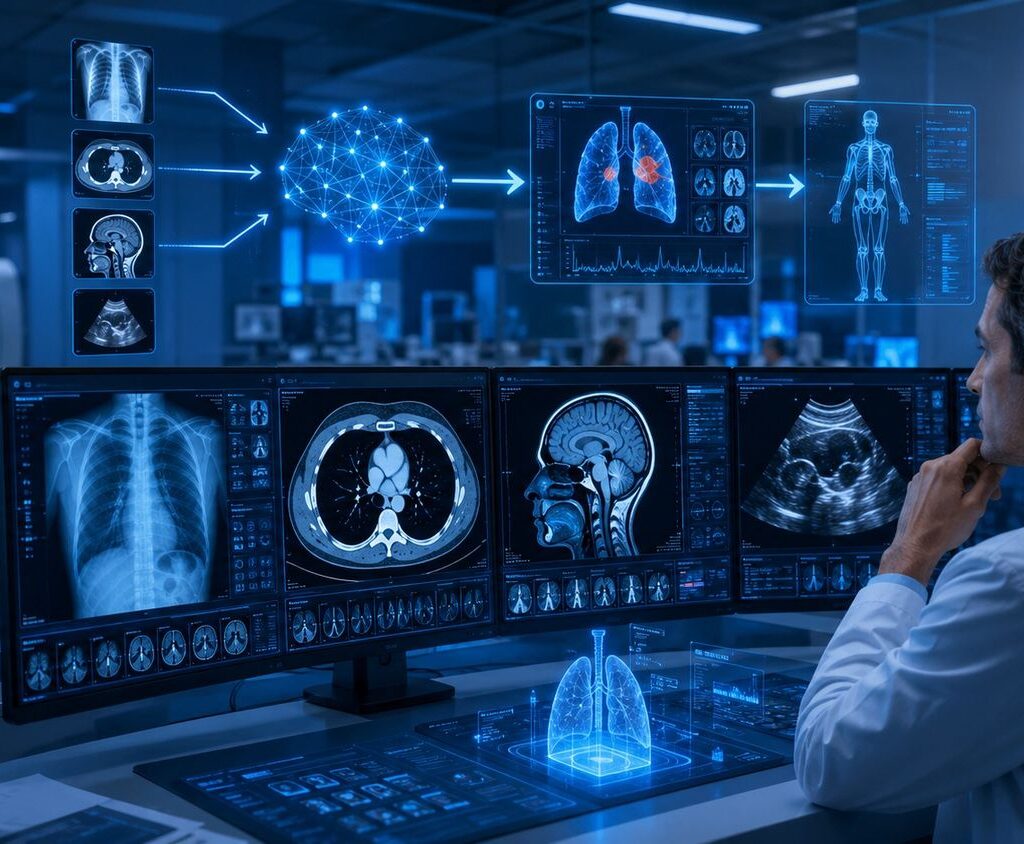
AI-powered radiology follows a structured workflow that integrates with existing hospital systems.
1. Medical Image Acquisition
Images are captured using diagnostic imaging equipment such as:
- X-ray systems
- Computed Tomography (CT)
- Magnetic Resonance Imaging (MRI)
- Ultrasound
- Mammography
- Positron Emission Tomography (PET)
These images are typically stored using the DICOM standard.
2. Image Processing
Before analysis begins, AI software enhances image quality, removes noise, standardises image orientation, and prepares the scan for interpretation.
3. Pattern Recognition
Deep learning algorithms analyse every image pixel, searching for abnormalities such as:
- Tumours
- Lung nodules
- Bone fractures
- Brain haemorrhage
- Stroke indicators
- Pulmonary embolism
- Breast lesions
Rather than relying on predefined rules, AI learns complex imaging patterns from large datasets.
4. Clinical Decision Support
The AI system generates findings, confidence scores, measurements, heat maps, or highlighted regions of interest. Radiologists review these suggestions alongside the original images before making the final diagnosis.
5. Reporting and Workflow Integration
Many AI solutions integrate directly with:
- PACS (Picture Archiving and Communication System)
- RIS (Radiology Information System)
- Electronic Health Records (EHR)
This enables faster reporting and seamless clinical workflows.
Benefits of AI in Radiology
Artificial intelligence provides value across multiple aspects of radiology practice.
Improved Diagnostic Accuracy
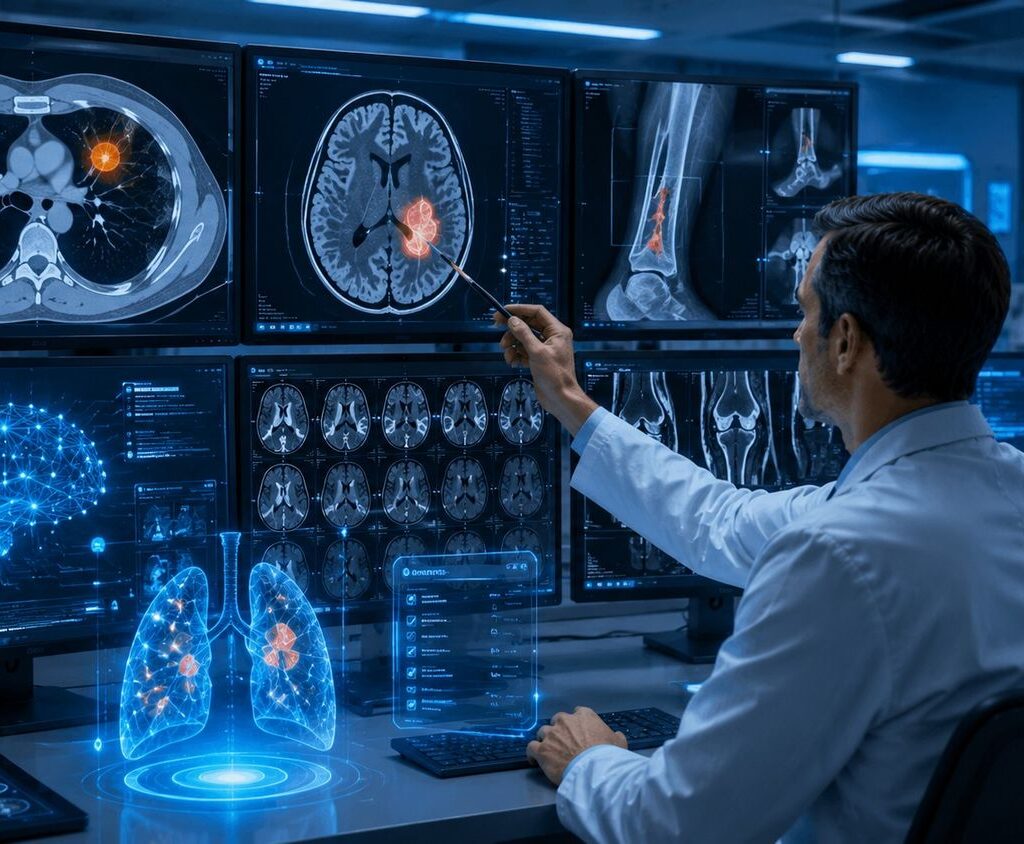
AI can identify subtle abnormalities that may be difficult to detect during busy clinical workflows. It acts as a second reader, helping reduce missed findings and increasing diagnostic confidence.
Faster Image Interpretation
Emergency departments often require immediate imaging results. AI rapidly analyses scans and flags critical findings, allowing radiologists to prioritise urgent cases such as intracranial haemorrhage or pulmonary embolism.
Reduced Radiologist Workload
Radiologists spend considerable time performing repetitive measurements and reviewing normal examinations. AI automates routine tasks, allowing specialists to focus on complex cases requiring clinical expertise.
Better Workflow Efficiency
Hospitals can reduce reporting delays by automatically prioritising critical studies, improving turnaround times and patient care.
Earlier Disease Detection
Early diagnosis significantly improves treatment outcomes. AI assists in detecting diseases at earlier stages, including:
- Lung cancer
- Breast cancer
- Liver disease
- Stroke
- Osteoporosis
- Cardiovascular disease
Quantitative Imaging
AI automatically measures lesion size, tumour volume, organ dimensions, and disease progression with greater consistency than manual measurements.
Clinical Applications of AI in Radiology
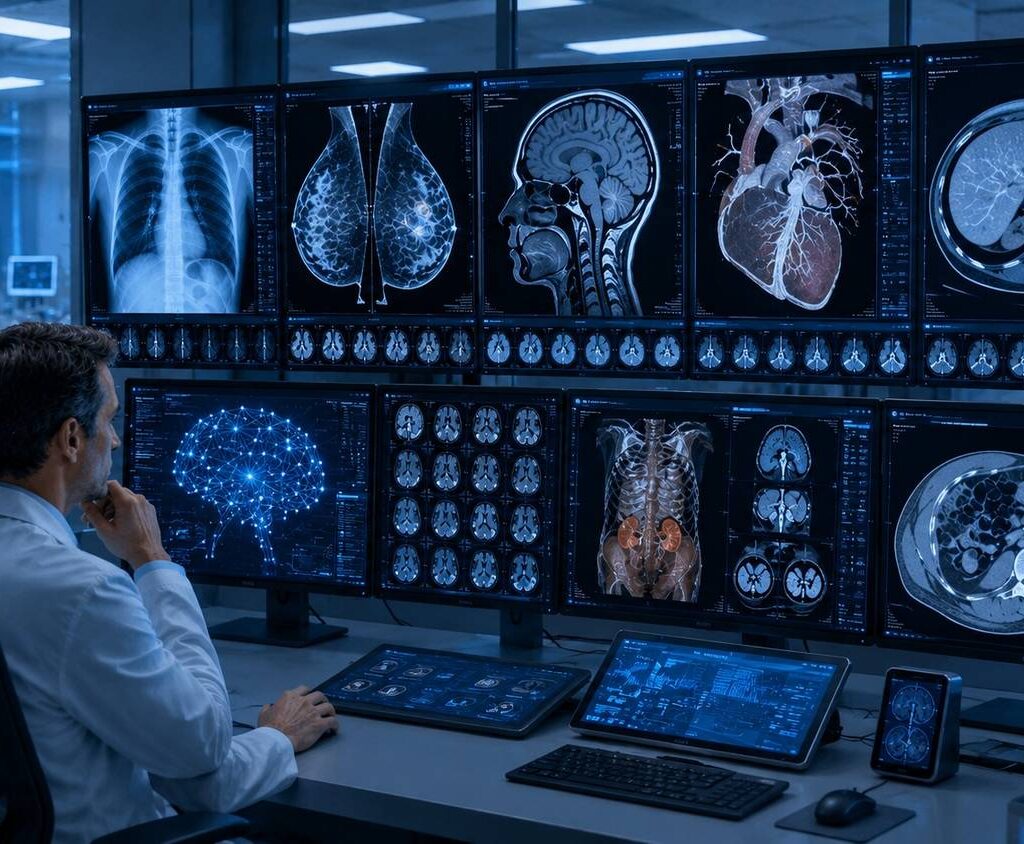
Artificial intelligence is transforming nearly every imaging specialty.
Chest Imaging
AI analyses chest X-rays and CT scans to detect:
- Pneumonia
- Tuberculosis
- Lung nodules
- COVID-19-related lung changes
- Chronic obstructive pulmonary disease (COPD)
These systems help radiologists identify suspicious findings more efficiently.
Breast Imaging
AI assists mammography screening by detecting:
- Microcalcifications
- Breast masses
- Architectural distortion
- Early-stage breast cancer
Many screening programmes now evaluate AI as an additional reader alongside radiologists.
Neuroimaging
Brain imaging benefits from AI through:
- Stroke detection
- Brain tumour segmentation
- Intracranial haemorrhage detection
- Multiple sclerosis lesion analysis
- Alzheimer’s disease assessment
Rapid stroke detection can significantly reduce treatment delays.
Musculoskeletal Imaging
AI helps identify:
- Bone fractures
- Joint abnormalities
- Osteoarthritis progression
- Spinal disorders
- Sports injuries
Emergency departments particularly benefit from fracture detection algorithms.
Cardiac Imaging
Artificial intelligence supports cardiovascular imaging by evaluating:
- Coronary artery disease
- Heart chamber volumes
- Cardiac function
- Aortic abnormalities
- Calcium scoring
Automated cardiac measurements improve consistency between examinations.
Abdominal Imaging
AI assists with diagnosing:
- Liver tumours
- Kidney disease
- Pancreatic lesions
- Colorectal cancer
- Gallbladder disease
It can also automatically segment abdominal organs for surgical planning.
AI Technologies Driving Modern Radiology
Several advanced technologies power today’s intelligent imaging systems.
Deep Learning
Deep learning models automatically learn imaging features without manual programming, making them highly effective for image recognition tasks.
Computer Vision
Computer vision enables machines to interpret visual information similarly to how humans analyse medical images.
Convolutional Neural Networks
CNNs are specialised deep learning models designed specifically for image analysis. They form the backbone of many AI imaging applications.
Natural Language Processing
NLP analyses radiology reports to:
- Extract clinical information
- Standardise reporting
- Identify follow-up recommendations
- Improve report quality
- Support clinical research
Generative AI
Generative AI is beginning to assist radiologists by summarising findings, drafting structured reports, and supporting educational applications. Human review remains essential before final reports are issued.
Challenges and Limitations
Despite impressive progress, AI in radiology still faces several challenges.
Data Quality
AI models require large, diverse, and accurately labelled datasets. Poor-quality training data may reduce diagnostic performance.
Algorithm Bias
If datasets do not represent different patient populations, AI may perform less accurately across certain age groups, ethnicities, or healthcare settings.
Clinical Validation
Every AI solution requires rigorous clinical testing before routine adoption. Performance must be evaluated across multiple hospitals and imaging devices.
Regulatory Approval
Many AI imaging tools require regulatory clearance from organisations such as the U.S. Food and Drug Administration (FDA) or CE marking in Europe before clinical use.
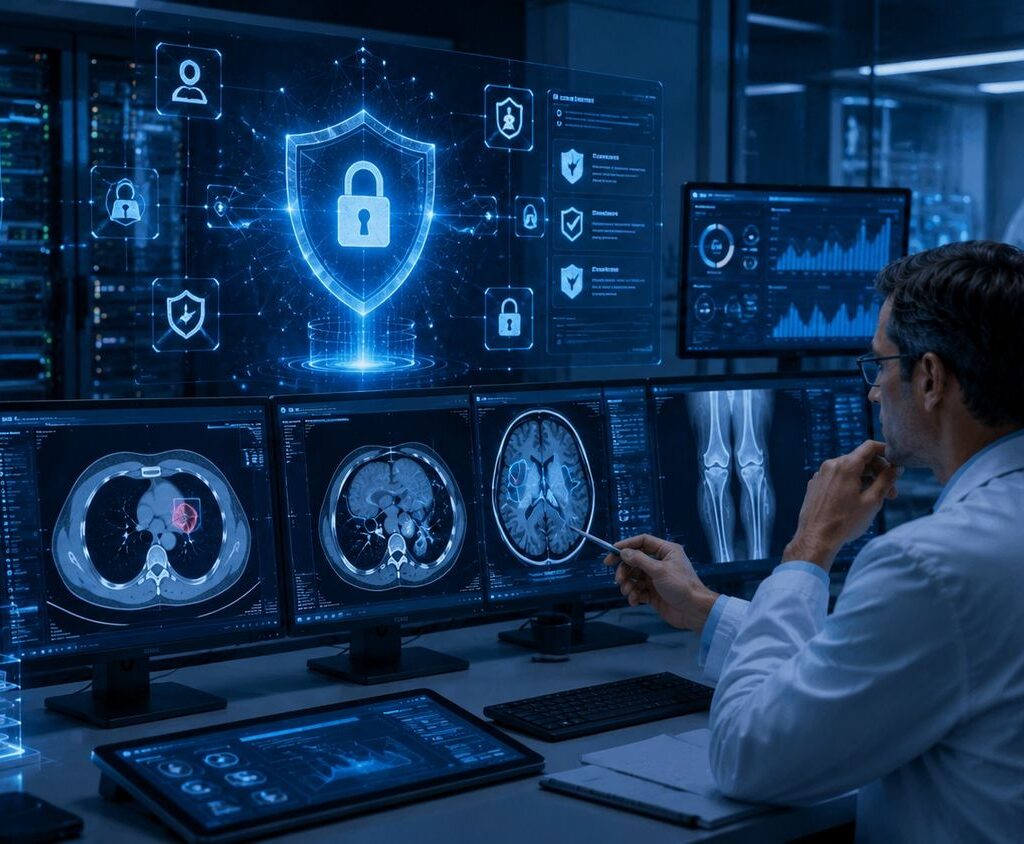
Privacy and Security
Medical imaging contains sensitive patient information. Healthcare organisations must protect data through encryption, secure storage, and compliance with privacy regulations.
Human Oversight
AI cannot replace the clinical reasoning of experienced radiologists. Patient history, symptoms, laboratory findings, and multidisciplinary discussions remain essential for accurate diagnosis.
AI and the Role of Radiologists
One common concern is whether AI will replace radiologists.
Current evidence suggests the opposite.
Radiologists perform much more than image interpretation. They correlate imaging findings with clinical information, communicate with referring physicians, recommend additional imaging, participate in multidisciplinary meetings, perform image-guided procedures, and ensure quality patient care.
AI excels at recognising patterns and automating repetitive tasks, while radiologists contribute clinical judgement, contextual understanding, ethical decision-making, and patient-centred care.
The future is likely to involve collaboration rather than replacement, where AI enhances productivity while radiologists remain responsible for final diagnoses.
Best Practices for Implementing AI in Radiology
Healthcare organisations can maximise the benefits of AI by following several best practices:
- Select clinically validated AI solutions with proven accuracy.
- Integrate AI into existing PACS and radiology workflows.
- Train radiologists and technologists to use AI effectively.
- Monitor algorithm performance regularly.
- Maintain human oversight for all diagnostic decisions.
- Protect patient privacy through robust cybersecurity measures.
- Continuously evaluate outcomes using real-world clinical data.
The Future of AI in Radiology
The future of radiology will likely involve increasingly intelligent and connected imaging systems.
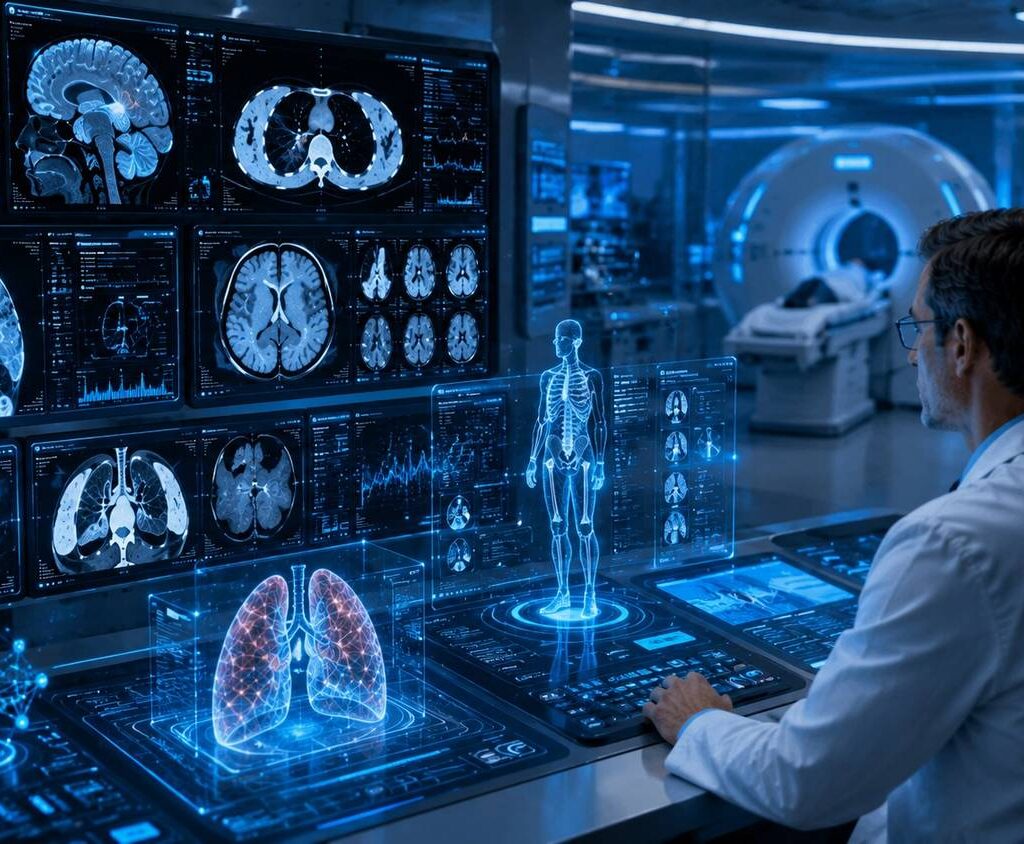
Emerging developments include:
- Personalised imaging recommendations
- Real-time image analysis during scanning
- AI-assisted interventional radiology
- Digital twins for disease modelling
- Federated learning that enables AI training without sharing sensitive patient data
- Multimodal AI combining imaging, pathology, genomics, laboratory results, and electronic health records
- Explainable AI that provides transparent reasoning behind predictions
As computing power and clinical datasets continue to expand, AI will become an even more valuable component of precision medicine.
Frequently Asked Questions
AI in radiology uses artificial intelligence algorithms to analyse medical images, detect abnormalities, assist diagnosis, automate repetitive tasks, and improve radiology workflows.
No. AI supports radiologists by improving efficiency and diagnostic accuracy, but human expertise remains essential for clinical interpretation, patient management, and final diagnostic decisions.
AI is widely used with X-rays, CT scans, MRI, ultrasound, mammography, PET scans, and other diagnostic imaging modalities.
Many AI systems demonstrate high accuracy for specific imaging tasks when validated clinically. However, performance varies depending on the disease, imaging quality, and patient population, which is why radiologist oversight remains necessary.
When properly validated and used under clinical supervision, AI can improve patient safety by reducing diagnostic errors, identifying urgent findings more quickly, and supporting earlier disease detection.
Key challenges include data quality, algorithm bias, regulatory approval, patient privacy, system integration, and ensuring clinicians maintain appropriate oversight.
AI automates image analysis, prioritises urgent cases, performs measurements, assists report generation, and integrates with hospital information systems to reduce reporting delays.
Conclusion
AI in radiology is reshaping medical imaging by combining advanced computing with clinical expertise. Through machine learning, deep learning, computer vision, and predictive analytics, AI-powered radiology helps detect disease earlier, improves diagnostic accuracy, streamlines workflows, and supports better patient outcomes.
However, artificial intelligence is most effective when it complements, rather than replaces, radiologists. Human judgement, clinical context, and patient-centred decision-making remain fundamental to safe and effective healthcare.
As technology continues to evolve, AI will play an increasingly important role in precision medicine, enabling faster diagnoses, more personalised treatment strategies, and more efficient healthcare systems. Organisations that adopt clinically validated AI solutions while maintaining strong governance, data security, and expert oversight will be best positioned to realise the full potential of intelligent medical imaging.
Reference
- American College of Radiology (ACR). Artificial Intelligence Resources.
- Radiological Society of North America (RSNA). Artificial Intelligence
- European Society of Radiology (ESR). Artificial Intelligence in Radiology..
- National Institutes of Health (NIH). Artificial Intelligence in Medical Imaging: Current and Future Applications