

Healthcare professionals spend a significant portion of their day documenting patient encounters instead of providing direct care. This administrative burden contributes to clinician burnout, increases operational costs, and can delay access to patient information. AI clinical documentation is changing this reality by using artificial intelligence to automate documentation tasks, improve accuracy, and support better clinical decision-making. As part of broader health care automation, AI-powered documentation solutions help healthcare organisations streamline workflows while maintaining high standards of patient care.
This article explores how AI clinical documentation works, its benefits, challenges, best practices, and its growing role in the future of healthcare.
What Is AI Clinical Documentation?
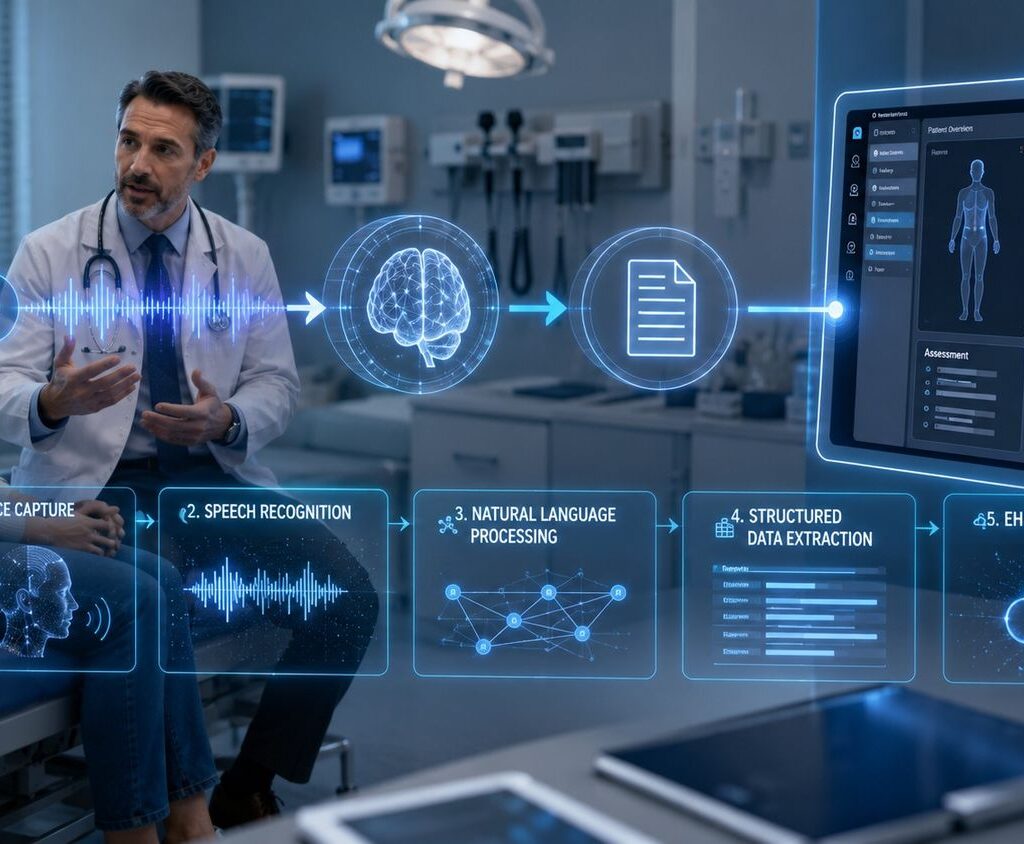
AI clinical documentation refers to the use of artificial intelligence technologies to create, organise, and manage medical documentation generated during patient care. These systems assist healthcare professionals by capturing conversations, extracting clinically relevant information, generating structured medical notes, and updating electronic health records (EHRs).
Modern AI documentation platforms combine several technologies, including:
- Natural Language Processing (NLP)
- Speech recognition
- Machine learning
- Large Language Models (LLMs)
- Clinical language understanding
- Medical terminology mapping
Instead of manually typing detailed notes after every consultation, clinicians can rely on AI to generate accurate documentation from real-time conversations.
Why AI Clinical Documentation Matters
Documentation is essential for continuity of care, legal compliance, billing, quality reporting, and communication among healthcare providers. However, manual documentation often consumes hours each day.
AI clinical documentation addresses several long-standing healthcare challenges by:
- Reducing administrative workload
- Improving documentation consistency
- Supporting accurate clinical coding
- Enhancing patient-provider interactions
- Increasing operational efficiency
- Minimising documentation errors
By reducing time spent on paperwork, clinicians can devote more attention to diagnosis, treatment planning, and patient engagement.
How AI Clinical Documentation Works
AI documentation systems follow a structured workflow that transforms spoken conversations into organised medical records.
1. Capturing Clinical Conversations
During appointments, secure voice recognition technology records conversations between clinicians and patients. Advanced speech recognition accurately identifies speakers while filtering background noise.
2. Natural Language Processing
Natural Language Processing analyses spoken language to identify:
- Symptoms
- Diagnoses
- Medications
- Allergies
- Laboratory results
- Medical history
- Treatment plans
- Follow-up recommendations
NLP also understands medical abbreviations, context, and specialised clinical vocabulary.
3. Clinical Information Extraction
Machine learning algorithms identify clinically important information while ignoring casual conversation. This process extracts structured data suitable for electronic health records.
4. Automated Note Generation
AI creates documentation in standard clinical formats such as:
- SOAP Notes (Subjective, Objective, Assessment, Plan)
- Progress notes
- Consultation notes
- Discharge summaries
- Referral letters
- Operative reports
The generated draft remains editable so clinicians can review and approve the final documentation.
5. Electronic Health Record Integration
Approved notes are securely transferred into Electronic Health Record (EHR) systems, ensuring patient records remain complete and accessible.
Key Technologies Behind AI Clinical Documentation
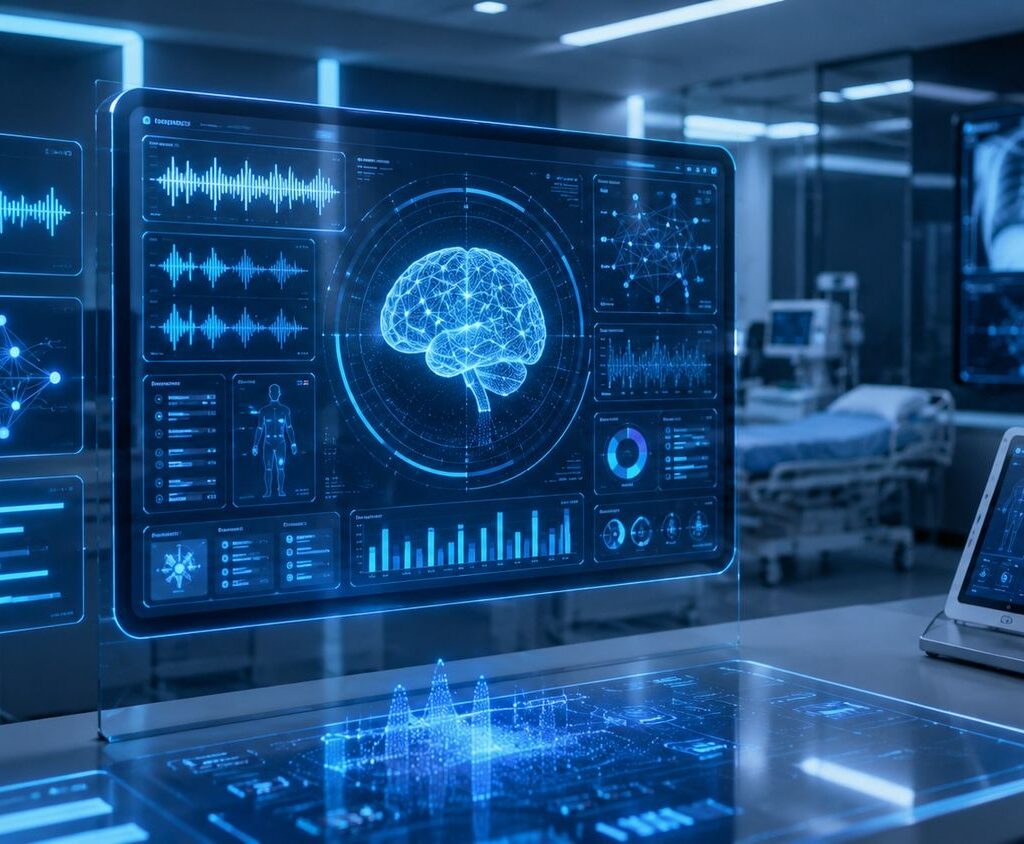
Several advanced technologies work together to enable intelligent documentation.
Natural Language Processing (NLP)
NLP enables computers to understand medical language, identify clinical concepts, and convert unstructured conversations into structured health records.
Machine Learning
Machine learning models improve documentation quality over time by learning from clinical patterns, corrections, and user feedback.
Large Language Models
Large Language Models assist with summarising conversations, generating coherent clinical notes, and maintaining context throughout complex patient interactions.
Speech Recognition
Modern speech recognition systems accurately convert spoken conversations into text, even in busy clinical environments.
Clinical Decision Support
Some AI documentation platforms integrate with clinical decision support systems to highlight missing information, suggest evidence-based recommendations, or identify potential documentation inconsistencies.
Benefits of AI Clinical Documentation

Reduced Administrative Burden
Documentation is one of the largest administrative responsibilities in healthcare. AI automates repetitive tasks, allowing clinicians to spend less time typing and more time treating patients.
Improved Documentation Quality
AI systems produce structured, consistent documentation that follows clinical standards while reducing omissions and transcription errors.
Better Patient Experience
When clinicians focus on patients rather than computer screens, communication improves. Patients often feel more engaged during consultations.
Increased Clinical Efficiency
Healthcare automation shortens documentation time, accelerates patient throughput, and improves overall workflow efficiency across hospitals and clinics.
Reduced Clinician Burnout
Administrative overload is a major contributor to physician burnout. AI documentation reduces after-hours charting, helping clinicians maintain a healthier work-life balance.
Enhanced Data Standardisation
Standardised documentation supports interoperability between healthcare systems, facilitates research, and improves population health management.
Improved Medical Coding
Well-structured documentation simplifies ICD and CPT coding, helping healthcare organisations improve billing accuracy while reducing claim denials.
AI Clinical Documentation Across Different Healthcare Settings
AI documentation is useful in a wide variety of medical environments.
Primary Care
Primary care physicians manage high patient volumes. AI rapidly documents routine consultations, preventive care visits, and chronic disease management.
Emergency Medicine
Emergency departments require fast documentation during time-sensitive situations. AI helps clinicians capture critical information without delaying care.
Speciality Clinics
Cardiology, oncology, orthopaedics, dermatology, psychiatry, and other specialties benefit from customised documentation templates tailored to speciality-specific terminology.
Hospitals
Hospital teams use AI for admission notes, daily progress notes, discharge summaries, and multidisciplinary documentation.
Telemedicine
Virtual consultations generate digital conversations that AI can efficiently summarise into structured clinical records.
AI Clinical Documentation and Health Care Automation
AI clinical documentation represents one component of broader health care automation.
Healthcare automation includes technologies that optimise administrative and clinical workflows such as:
- Automated appointment scheduling
- Digital patient registration
- Clinical workflow automation
- Revenue cycle management
- Predictive analytics
- Medication management
- AI-assisted diagnostics
- Population health monitoring
When documentation integrates with these automated systems, healthcare organisations achieve greater operational efficiency while improving care quality.
Data Privacy and Security

Healthcare data requires strong protection. AI documentation platforms must comply with healthcare privacy regulations and cybersecurity best practices.
Important security measures include:
- End-to-end encryption
- Secure cloud infrastructure
- Multi-factor authentication
- Role-based access control
- Audit logging
- Data anonymisation where appropriate
- Regular security assessments
Healthcare organisations should ensure vendors follow applicable regulatory frameworks and maintain rigorous security standards before deploying AI documentation systems.
Challenges of AI Clinical Documentation
Although AI offers significant advantages, several challenges remain.
Accuracy Verification
AI-generated notes require clinician review to ensure medical accuracy, particularly for complex or unusual cases.
Clinical Context
Certain patient situations involve subtle clinical judgement that AI may not fully understand without physician oversight.
Integration Complexity
Healthcare organisations often operate multiple legacy systems. Integrating AI documentation into existing EHR infrastructure may require technical planning.
Data Quality
Poor audio quality, incomplete conversations, or inconsistent terminology can reduce documentation accuracy.
User Adoption
Successful implementation depends on clinician training, workflow optimisation, and organisational support.
Best Practices for Implementing AI Clinical Documentation
Healthcare organisations can maximise success by following several best practices.
Keep Clinicians in Control
AI should assist rather than replace clinical judgement. Every generated document should be reviewed before final approval.
Select Healthcare-Specific AI Solutions
General-purpose AI systems may not understand complex medical terminology. Healthcare-focused platforms provide greater clinical accuracy.
Integrate With Existing Workflows
Documentation tools should fit naturally into existing clinical processes rather than creating additional administrative work.
Provide Staff Training
Clinicians should understand both the capabilities and limitations of AI documentation systems.
Monitor Performance
Regular quality audits help identify documentation errors, improve workflows, and ensure continuous optimisation.
The Future of AI Clinical Documentation

AI clinical documentation continues to evolve rapidly.
Future innovations are expected to include:
- More accurate real-time documentation
- Multilingual clinical conversations
- Predictive clinical documentation
- Improved interoperability across healthcare systems
- Automated quality reporting
- Personalised documentation based on speciality
- Enhanced clinical decision support
- Greater integration with wearable health devices and remote patient monitoring
As artificial intelligence becomes more sophisticated, documentation will become increasingly intelligent, proactive, and context-aware.
Frequently Asked Questions
AI clinical documentation uses artificial intelligence to automatically generate medical records, clinical notes, and documentation from patient interactions while supporting healthcare professionals during routine documentation tasks.
AI automates repetitive administrative processes such as documentation, scheduling, coding, and data management, allowing healthcare providers to focus more on patient care.
No. AI supports clinicians by reducing administrative work, but final medical decisions, diagnoses, and documentation approval remain the responsibility of qualified healthcare professionals.
Modern AI systems achieve high levels of accuracy, especially when combined with clinician review. Continuous learning and quality assurance further improve performance.
Yes. Most enterprise AI documentation platforms are designed to integrate with Electronic Health Record systems, enabling seamless data transfer and workflow automation.
Major benefits include reduced documentation time, improved efficiency, lower administrative burden, enhanced patient interaction, and decreased clinician burnout.
Key challenges include system integration, user adoption, data privacy, documentation accuracy, regulatory compliance, and maintaining clinician oversight.
Primary care, hospitals, emergency departments, speciality clinics, telemedicine services, and outpatient practices can all benefit from AI-assisted documentation.
Conclusion
AI clinical documentation is reshaping modern healthcare by combining artificial intelligence, natural language processing, speech recognition, and machine learning to automate one of medicine’s most time-consuming administrative tasks. As a cornerstone of health care automation, it reduces clinician workload, improves documentation quality, supports accurate coding, and enhances the overall patient experience.
While challenges such as integration, data security, and clinical oversight remain important, organisations that implement AI responsibly can improve efficiency without compromising patient safety. The future of clinical documentation lies in intelligent collaboration between healthcare professionals and AI systems, where automation handles routine administrative work while clinicians focus on delivering compassionate, evidence-based care. Together, this partnership promises more efficient healthcare operations, better clinical outcomes, and a stronger foundation for the digital transformation of medicine.
References
- World Health Organization (WHO). Ethics and Governance of Artificial Intelligence for Health
- National Library of Medicine (PubMed). Natural Language Processing for Clinical Documentation
- Office of the National Coordinator for Health Information Technology (ONC). Electronic Health Records
- U.S. Food and Drug Administration (FDA). Artificial Intelligence and Machine Learning in Software as a Medical Devic