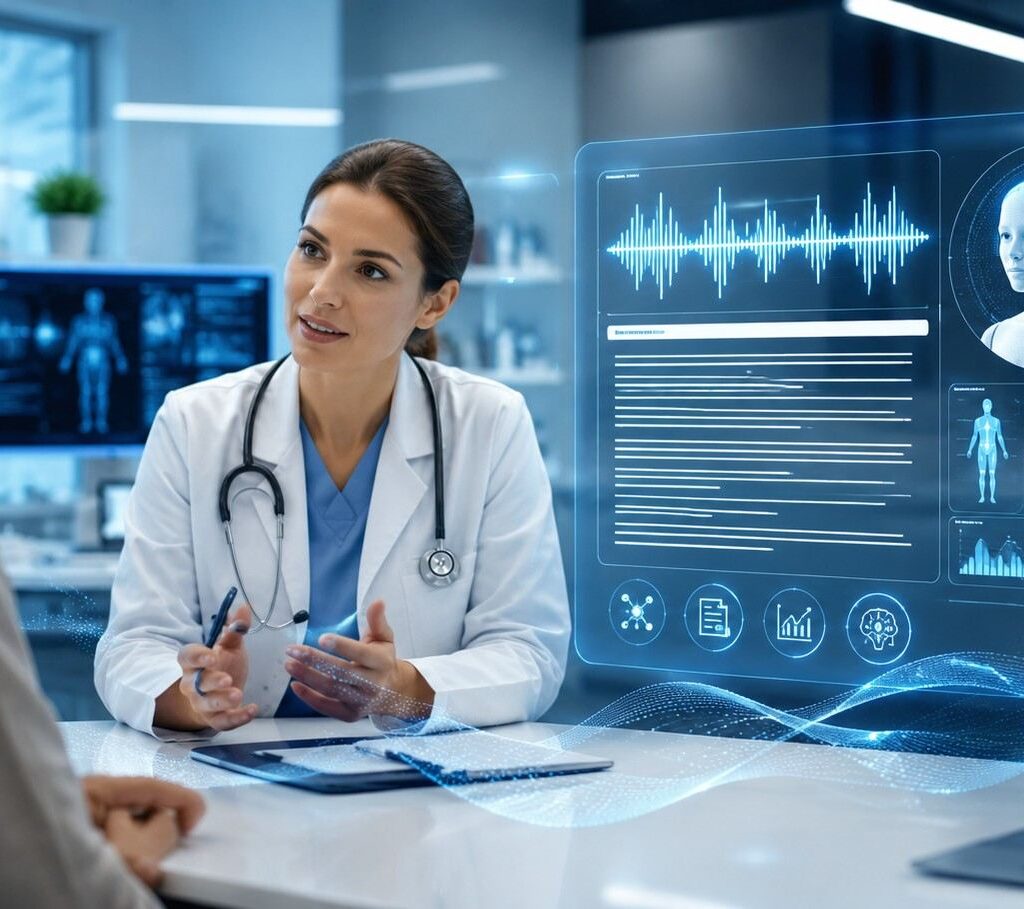

Healthcare professionals spend a significant portion of their day documenting patient encounters instead of providing direct patient care. Clinical notes, patient histories, treatment plans, and insurance documentation are essential for quality healthcare, but they also contribute to administrative burden and physician burnout. This challenge has accelerated the adoption of generative AI medical documentation solutions that automate note-taking while maintaining clinical accuracy.
Generative AI is reshaping medical documentation by combining speech recognition, natural language processing (NLP), machine learning, and large language models (LLMs). These technologies enable clinicians to create accurate documentation in real time, reduce manual data entry, and improve workflow efficiency without compromising patient care.
This article explores the leading generative AI tools for medical documentation, how they work, their benefits, limitations, and best practices for healthcare organizations.
What Is Generative AI Medical Documentation?
Generative AI medical documentation refers to AI-powered systems that automatically create clinical notes from physician-patient conversations, medical dictation, or electronic health records (EHR) data.
Unlike traditional voice dictation software, modern AI understands clinical context, medical terminology, patient history, and healthcare workflows. Instead of merely converting speech into text, it organizes information into structured clinical documentation such as:
- SOAP notes
- Progress notes
- Admission notes
- Discharge summaries
- Referral letters
- Operative reports
- Follow-up documentation
These tools integrate with electronic health records (EHR) systems to streamline documentation and reduce repetitive administrative work
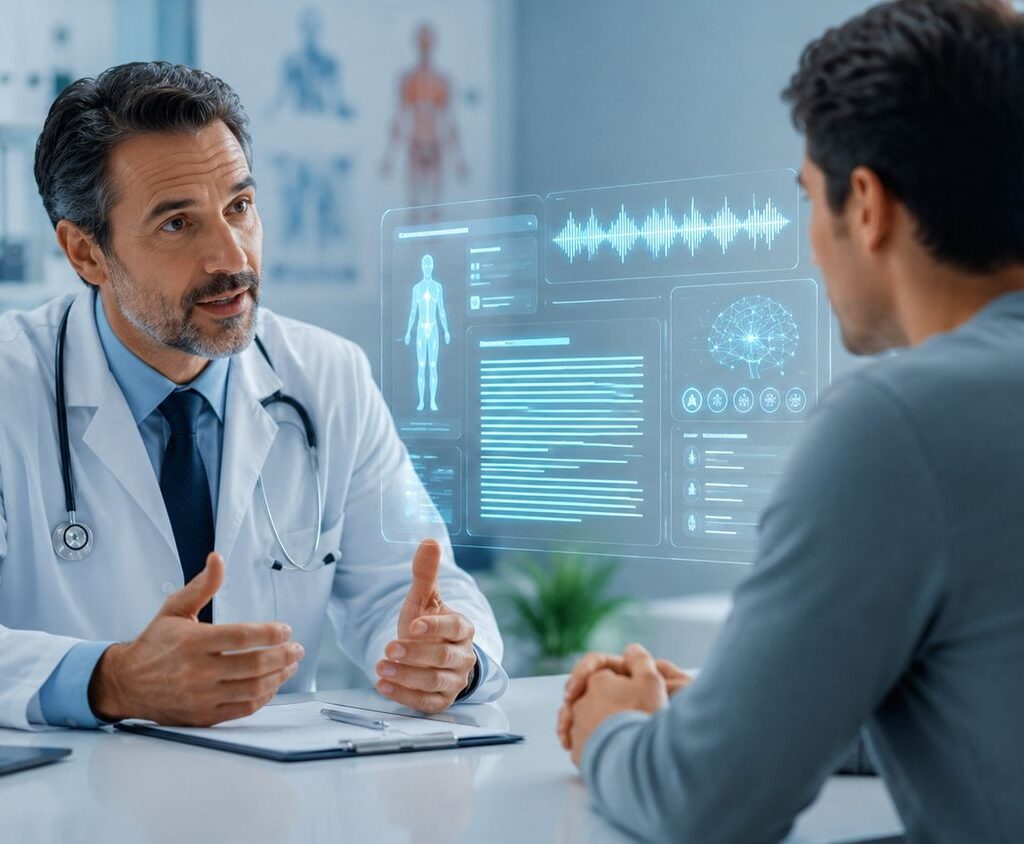
How Generative AI Medical Documentation Works
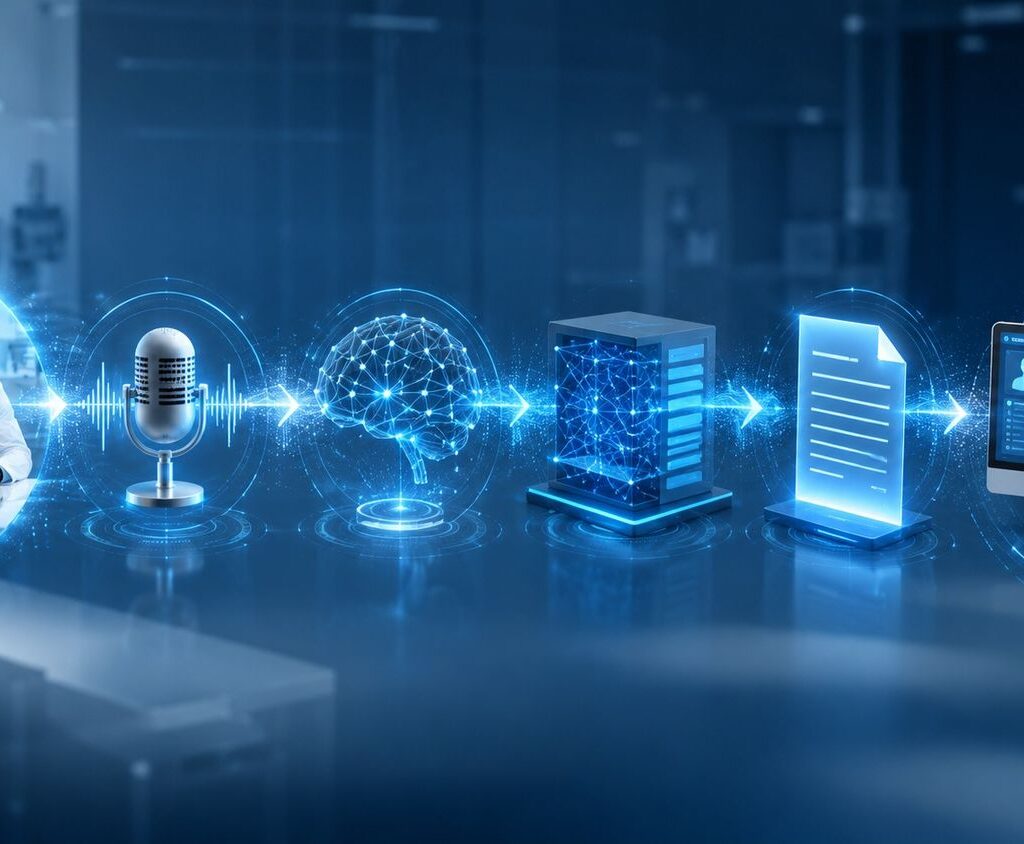
Modern AI documentation platforms combine several technologies to produce clinically useful records.
Speech Recognition
AI captures conversations between clinicians and patients during consultations.
Natural Language Processing (NLP)
Natural language processing identifies symptoms, diagnoses, medications, laboratory results, and clinical intent from spoken language.
Large Language Models (LLMs)
Large language models organize extracted information into professional medical documentation using appropriate clinical language.
Clinical Decision Support
Some platforms also identify missing information, recommend coding improvements, and highlight incomplete documentation before records are finalized.
EHR Integration
Most enterprise platforms synchronize documentation directly with electronic health record systems, reducing duplicate data entry and improving workflow efficiency.
Why AI Medical Scribes Are Becoming Essential
Medical professionals often spend several hours each day completing documentation after patient appointments.
AI medical scribes clinical documentation solutions reduce this burden by acting as virtual assistants during consultations.
Instead of manually typing notes, clinicians can focus on patient communication while AI captures:
- Chief complaint
- History of present illness
- Physical examination
- Assessment
- Treatment plan
- Follow-up recommendations
This improves both physician productivity and patient engagement.
Top Generative AI Tools for Medical Documentation
1. Microsoft Dragon Copilot
Microsoft combines Dragon Medical speech recognition with generative AI capabilities to produce structured clinical documentation.
Key features include:
- Ambient clinical listening
- Automated SOAP note generation
- EHR integration
- Medical vocabulary optimization
- Secure enterprise deployment
Dragon Copilot is particularly popular among hospitals seeking enterprise-grade documentation solutions.
2. Abridge
Abridge uses generative AI to transform clinician-patient conversations into structured medical notes.
Notable capabilities include:
- Real-time conversation summaries
- EHR integration
- Clinician review before submission
- Medical terminology recognition
- Multispecialty support
Abridge emphasizes transparency by linking documentation to the original conversation.
3. Nabla
Nabla provides an AI assistant that generates clinical notes automatically during consultations.
Its strengths include:
- Fast note generation
- Specialty-specific documentation
- Multilingual support
- Workflow customization
- HIPAA-focused security
Many outpatient practices use Nabla to reduce documentation time.
4. Suki AI
Suki AI combines voice recognition with generative AI to simplify clinical documentation.
Key capabilities include:
- Voice commands
- Clinical documentation automation
- Coding assistance
- Medication documentation
- EHR compatibility
Suki focuses on minimizing administrative workload across multiple specialties.
5. Nuance Dragon Medical One
Dragon Medical One remains one of the most widely used clinical speech recognition platforms.
Recent AI enhancements include:
- Context-aware documentation
- Intelligent formatting
- Clinical terminology optimization
- Cloud-based deployment
- Integration with Microsoft healthcare services
Its extensive medical vocabulary makes it suitable for complex clinical environments.
6. DeepScribe
DeepScribe operates as an ambient AI medical scribe that listens during patient encounters and creates structured documentation.
Features include:
- Automatic clinical note creation
- Workflow learning
- Specialty customization
- EHR integration
- Reduced physician documentation time
Many primary care physicians use DeepScribe to improve efficiency during busy clinics.
Benefits of Generative AI in Medical Documentation
Reduced Administrative Burden
Clinicians spend less time typing notes and more time interacting with patients.
Improved Documentation Quality
AI produces standardized documentation with consistent formatting and terminology.
Better Physician Satisfaction
Reducing documentation workload helps decrease clinician burnout and improves work-life balance.
Increased Productivity
Healthcare providers can see more patients without increasing documentation time.
Faster EHR Updates
Clinical notes become available immediately after consultations, improving communication among healthcare teams.
Improved Coding Accuracy
AI can suggest appropriate medical coding and identify missing documentation that may affect reimbursement.
Enhanced Patient Experience
When clinicians spend less time looking at computer screens, patients often experience more meaningful interactions.
The Role of Electronic Health Records (EHR)
Electronic health records remain the central repository of patient information.
Generative AI complements EHR systems rather than replacing them.
AI documentation platforms automatically populate:
- Patient history
- Diagnoses
- Medications
- Allergies
- Treatment plans
- Follow-up instructions
Integration with EHR platforms reduces duplicate documentation and improves continuity of care across departments.
Natural Language Processing in Healthcare Automation
Natural language processing (NLP) enables AI systems to understand clinical conversations rather than simply transcribing words.
Healthcare NLP can identify:
- Symptoms
- Diseases
- Procedures
- Laboratory values
- Medication names
- Clinical abbreviations
- Diagnostic reasoning
NLP also detects relationships between medical concepts, allowing AI to generate clinically meaningful documentation.
For example, NLP distinguishes between:
- Family history and patient history
- Current medications and discontinued medications
- Confirmed diagnoses and suspected conditions
This contextual understanding greatly improves documentation quality.
Health Care Automation Beyond Documentation
Medical documentation is only one application of healthcare automation.
Generative AI also supports:
- Clinical decision support
- Patient communication
- Appointment summaries
- Prior authorization assistance
- Medical coding
- Revenue cycle management
- Clinical research
- Quality reporting
As healthcare organizations adopt integrated AI platforms, documentation becomes part of a larger automated clinical ecosystem.
Challenges and Limitations
Although AI documentation offers significant advantages, organizations should understand its limitations.
Privacy and Security
Patient information must remain protected through strong encryption, secure storage, and compliance with healthcare privacy regulations.
Human Review
AI-generated documentation should always be reviewed by clinicians before becoming part of the official medical record.
Hallucinations
Large language models may occasionally generate inaccurate or unsupported clinical statements. Human oversight remains essential.
Specialty Differences
Documentation requirements vary across specialties such as cardiology, radiology, psychiatry, surgery, and pediatrics. AI systems require specialty-specific optimization.
Integration Complexity
Healthcare organizations often use multiple EHR systems, making seamless integration a technical challenge.
Best Practices for Implementing AI Medical Documentation
Healthcare organizations should follow several best practices to maximize success.
- Choose AI tools that integrate with existing EHR systems.
- Ensure compliance with healthcare privacy and security regulations.
- Train clinicians on appropriate AI usage.
- Maintain physician oversight of all generated documentation.
- Regularly evaluate documentation accuracy.
- Monitor workflow improvements and clinician satisfaction.
- Update AI models as medical terminology and clinical guidelines evolve.
A thoughtful implementation strategy improves adoption while maintaining documentation quality.
The Future of Generative AI in Clinical Documentation
Generative AI continues to evolve rapidly.
Future systems are expected to provide:
- Real-time clinical recommendations
- Predictive documentation support
- Automated quality improvement reporting
- Personalized physician workflows
- Better multilingual documentation
- Improved interoperability across healthcare systems
- More accurate medical reasoning
As foundation models become increasingly specialized for medicine, AI will move beyond documentation toward intelligent clinical collaboration.
Rather than replacing healthcare professionals, these systems will function as trusted assistants that reduce administrative workload while supporting high-quality patient care.

Frequently Asked Questions
Generative AI medical documentation uses artificial intelligence to create structured clinical notes from conversations, dictation, and healthcare data while integrating with electronic health records.
Traditional dictation converts speech into text. AI medical scribes understand clinical context, organize information into structured notes, and can integrate directly with EHR systems.
No. AI assists clinicians by automating documentation, but physicians remain responsible for reviewing, verifying, and approving medical records.
When implemented correctly with encryption, access controls, regulatory compliance, and secure cloud infrastructure, AI documentation platforms can protect sensitive patient information. Healthcare organizations must still follow applicable privacy regulations
Primary care clinics, hospitals, emergency departments, specialty practices, telemedicine providers, and outpatient centers can all benefit from AI-assisted documentation.
Yes. AI improves EHR workflows by reducing manual data entry, increasing documentation consistency, and making clinical information available more quickly.
Natural language processing enables AI to understand clinical language, recognize medical terminology, identify relationships between symptoms and diagnoses, and generate meaningful clinical documentation.
Conclusion
Generative AI medical documentation is transforming healthcare by reducing administrative burden, improving documentation quality, and allowing clinicians to spend more time with patients. Technologies such as AI medical scribes, natural language processing, large language models, and seamless electronic health record integration are creating faster, more accurate, and more efficient clinical workflows.
Leading platforms including Microsoft Dragon Copilot, Abridge, Nabla, Suki AI, Dragon Medical One, and DeepScribe demonstrate how AI is becoming an essential part of modern healthcare automation. While challenges such as privacy, integration, and human oversight remain important, organizations that adopt these technologies responsibly can improve clinician productivity, documentation accuracy, and overall patient care.
As healthcare continues its digital transformation, generative AI will play an increasingly central role in creating intelligent, connected, and patient-centered documentation systems that support both healthcare professionals and the people they serve.