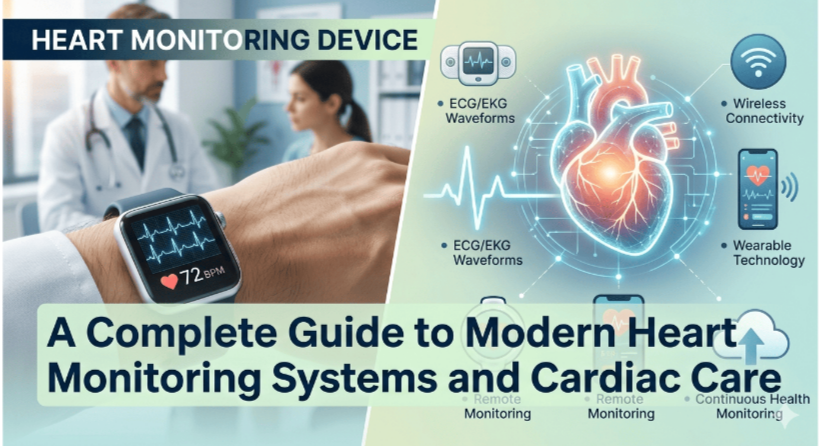

Heart health has become one of the most important priorities in global healthcare. Cardiovascular diseases affect millions of people each year and remain a leading cause of long-term illness and mortality worldwide. At the center of early detection, diagnosis, treatment planning, and ongoing cardiac management is one critical category of medical technology: the heart monitoring device.
A modern heart monitoring system does more than record heartbeats. It captures physiological signals, converts them into meaningful clinical information, supports healthcare decisions, and increasingly enables remote and continuous care.
From hospital-based electrocardiography systems to wearable sensors and implantable monitors, heart monitoring technology is changing how cardiovascular conditions are detected and managed across different healthcare environments.
What Is a Heart Monitoring Device?
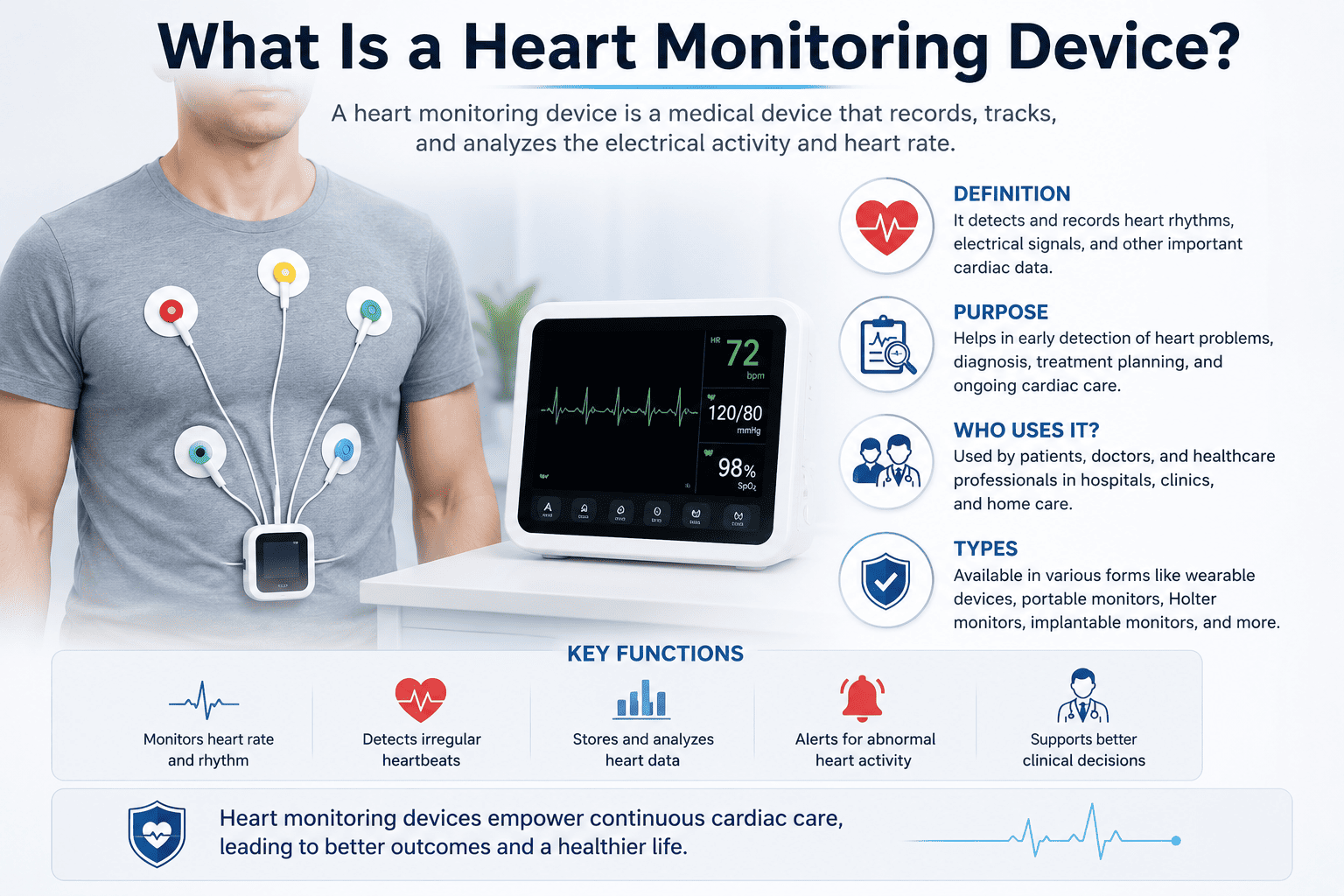
A heart monitoring device is a medical system designed to observe, record, analyze, or transmit information about heart function.
Most heart monitoring devices focus on measuring:
- Heart rhythm
- Electrical activity
- Heart rate
- Rhythm variability
- Cardiac events
- Physiological response patterns
These systems may operate continuously, intermittently, remotely, or in real time depending on clinical goals.
Heart monitoring is commonly performed through electrocardiography (ECG), which records the electrical activity generated during each heartbeat. Modern monitoring may also include optical sensing methods and digital analytics.
Why Heart Monitoring Systems Matter
The human heart depends on coordinated electrical signals to maintain effective circulation.
When electrical pathways or cardiac performance become disrupted, problems may appear such as:
- Arrhythmias
- Atrial fibrillation
- Bradycardia
- Tachycardia
- Heart failure
- Ischemic heart conditions
Many cardiac abnormalities occur unpredictably.
A brief clinic examination may not capture irregular events.
Heart monitoring systems extend observation periods and create a more complete picture of cardiovascular function.
This improves:
- Diagnostic accuracy
- Clinical decision-making
- Treatment timing
- Long-term outcome tracking
- Preventive care strategies
Continuous monitoring has become especially valuable for patients with intermittent symptoms that are difficult to capture during short examinations.
How a Heart Monitoring Device Works
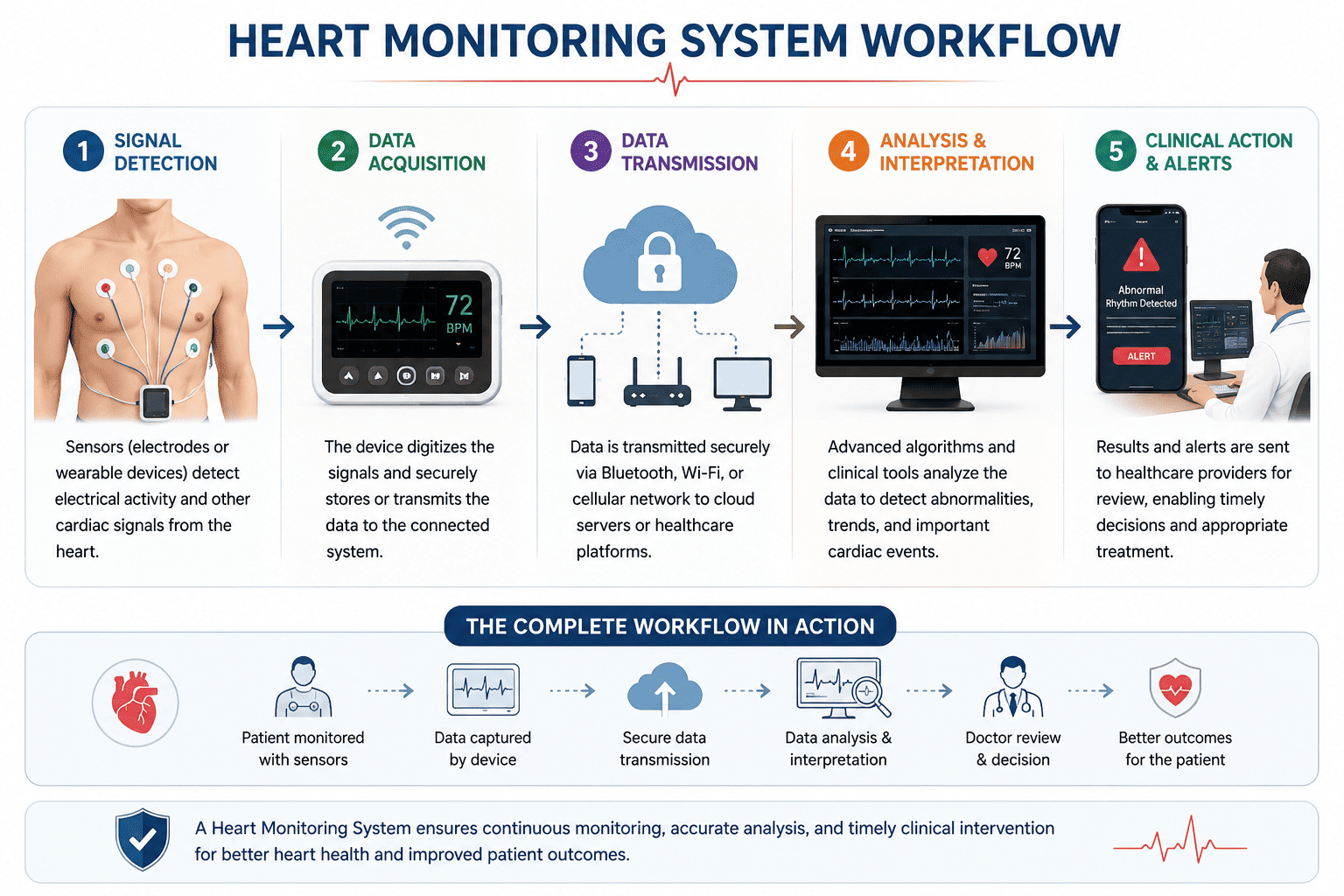
Although device types vary, most follow a similar workflow.
1. Signal Detection
Sensors collect physiological information.
These may include:
- ECG electrodes
- Optical sensors
- Motion sensors
- Mechanical pulse detection
Electrical sensors remain the clinical standard for rhythm analysis.
2. Data Acquisition
Collected signals are digitized and stored.
Systems apply filtering to reduce motion artifacts and improve signal quality.
3. Interpretation
Algorithms and clinicians evaluate:
- Rhythm patterns
- Signal intervals
- Abnormal cardiac activity
- Trend changes
4. Clinical Action
Healthcare teams use findings to guide diagnosis, medication adjustment, further testing, or intervention.
Types of Heart Monitoring Devices
Different cardiac conditions require different monitoring approaches.
Electrocardiogram (ECG or EKG)
The ECG is one of the most widely used heart monitoring methods.
It measures electrical impulses traveling through the heart.
Common uses include:
- Chest pain assessment
- Rhythm evaluation
- Emergency cardiac screening
- Pre-surgical assessment
Standard ECG testing captures short periods of activity and is often the starting point for cardiac evaluation
Holter Monitor
A Holter monitor provides continuous recording while patients go about daily activities.
Typical monitoring duration:
- 24 hours
- 48 hours
- Extended periods depending on clinical need
Holter systems are useful when symptoms occur regularly but unpredictably.
Event Monitor
Event monitors focus on capturing irregular episodes.
Unlike continuous systems, they may activate automatically or when symptoms occur.
These devices are commonly used for:
- Palpitations
- Dizziness
- Episodic rhythm disturbances
- Syncope investigations
Event monitoring may continue for weeks to increase detection probability.
Implantable Cardiac Monitor
Implantable cardiac monitors are inserted beneath the skin and provide long-term monitoring.
These devices are particularly valuable for difficult-to-diagnose rhythm disorders.
Benefits include:
- Continuous observation
- Long-term data collection
- Reduced dependence on symptom timing
Some insertable systems can monitor for multiple years depending on device configuration.
Wearable Heart Monitoring Systems
Wearable technology has introduced continuous heart tracking into everyday life.
Examples include:
- Smartwatches
- Chest sensors
- ECG patches
- Connected health devices
Wearables support:
- Preventive health
- Lifestyle awareness
- Remote patient observation
However, consumer devices should not replace clinical diagnosis.
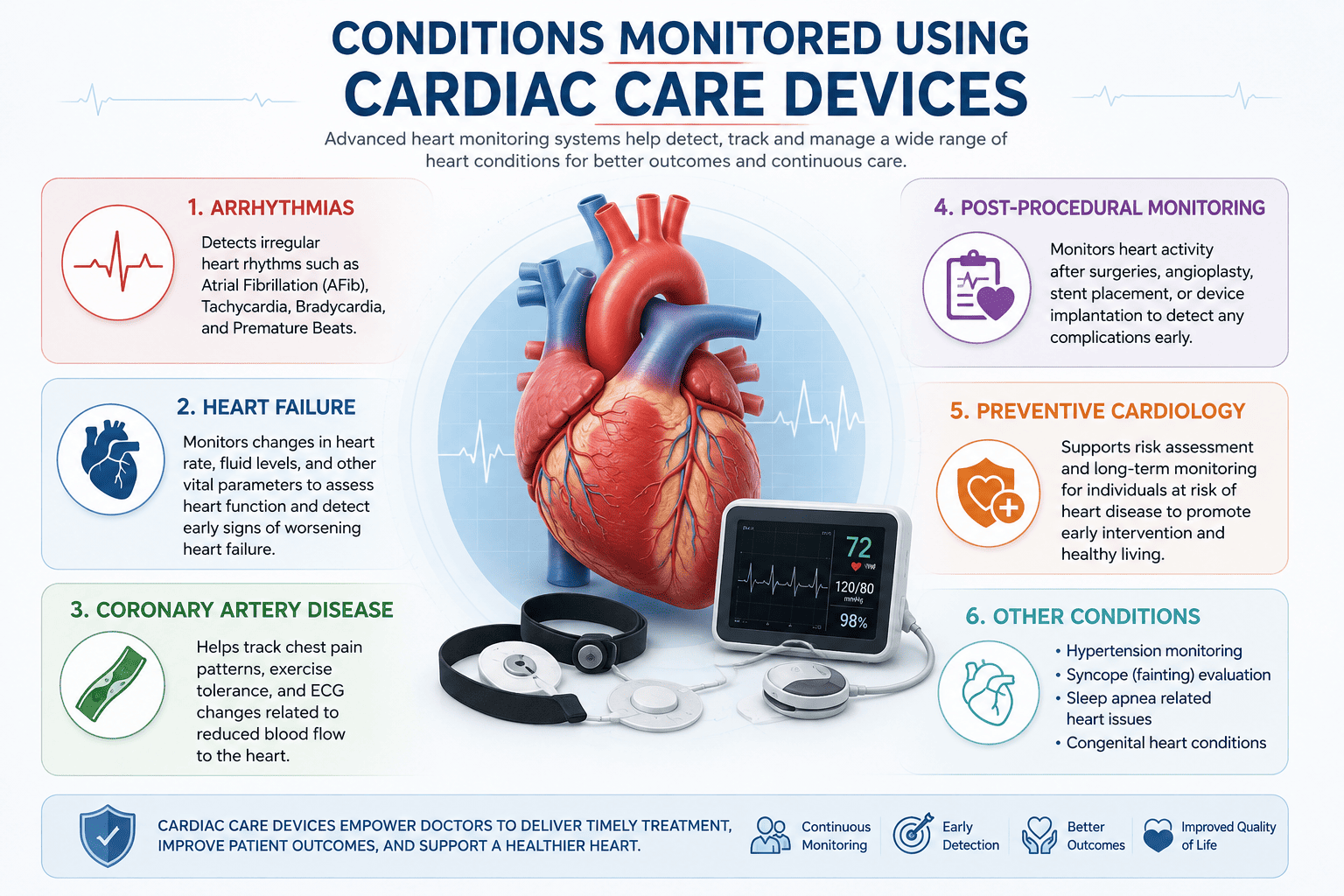
Conditions Commonly Evaluated Through Heart Monitoring
Heart monitoring systems support both diagnosis and ongoing management.
Arrhythmias
Abnormal heart rhythms often require prolonged observation.
Examples include:
- Atrial fibrillation
- Ventricular tachycardia
- Premature contractions
AFib remains one of the most common irregular heart rhythms worldwide and may occur without noticeable symptoms.
Heart Failure
Monitoring helps identify changes that indicate worsening cardiac function.
This supports earlier treatment adjustment.
Coronary Artery Disease
Monitoring assists clinicians in evaluating recovery, treatment effectiveness, and symptom progression.
Post-Procedural Cardiac Care
Patients recovering from interventions may require monitoring to identify complications early.
Preventive Cardiology
Long-term monitoring can reveal early warning signs before severe symptoms appear.
Heart Monitoring Systems and Remote Patient Care
Cardiac care is moving beyond hospitals.
Remote monitoring allows heart data to travel securely from patients to healthcare teams.
Typical remote monitoring architecture includes:
- Sensor devices
- Mobile applications
- Cloud platforms
- Clinical dashboards
- Alert systems
Remote monitoring supports:
- Chronic disease management
- Reduced hospital visits
- Earlier interventions
- Better continuity of care
Telemetry and biotelemetry technologies allow transmission of cardiac information across distances while maintaining ongoing observation.
Artificial Intelligence and the Future of Heart Monitoring
Artificial intelligence is increasingly integrated into heart monitoring systems.
AI applications include:
- Pattern recognition
- Automated ECG interpretation
- Risk prediction
- Clinical alerts
- Predictive cardiac analytics
Machine learning models can identify subtle rhythm changes and prioritize clinically significant events.
Modern cardiac technology increasingly combines:
Clinical expertise + physiological sensing + digital infrastructure + predictive analytics.
This relationship is creating more proactive cardiac care models.
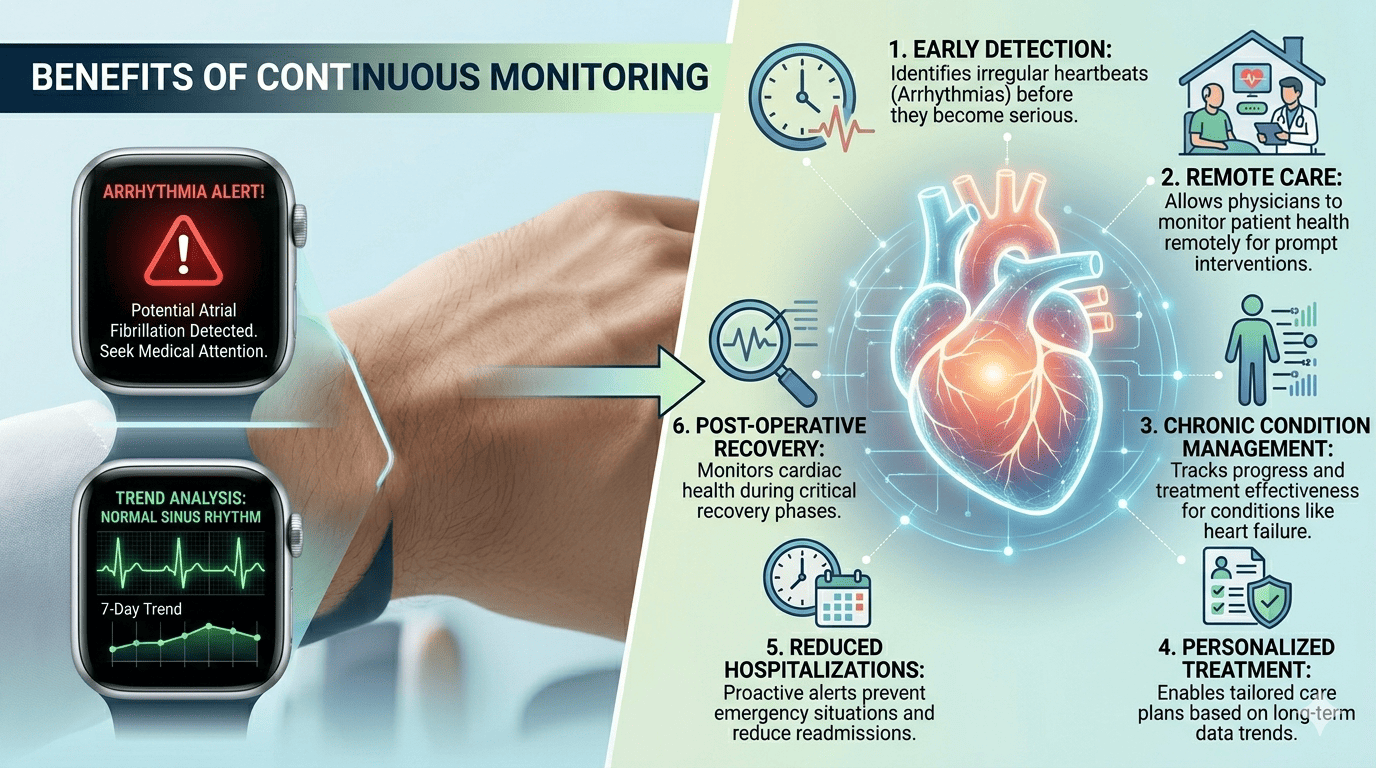
Benefits of Heart Monitoring Devices
Earlier Detection
Continuous observation increases opportunities for early diagnosis.
Better Treatment Decisions
More complete data improves medical judgment.
Personalized Care
Monitoring supports patient-specific management.
Increased Access
Remote technologies expand care availability.
Improved Long-Term Outcomes
Trend analysis supports earlier interventions.
Challenges and Limitations
Despite progress, limitations remain.
Data Overload
Continuous monitoring generates large volumes of information.
False Positives
Not every abnormal reading represents disease.
Patient Compliance
Device effectiveness depends on consistent use.
Privacy and Security
Connected monitoring requires strong protection of health information.
Accessibility
Availability and cost remain barriers in some regions.
Best Practices for Effective Cardiac Monitoring
For meaningful outcomes:
- Select the correct device type.
- Follow physician instructions.
- Monitor trends rather than isolated readings.
- Maintain proper sensor placement.
- Combine device data with clinical evaluation.
- Protect personal health information.
- Schedule appropriate follow-up.
Technology performs best when integrated into coordinated healthcare.
Frequently Asked Questions
Most devices monitor electrical activity, heart rhythm, heart rate, and related cardiac patterns.
A device refers to the hardware itself, while a monitoring system includes software, connectivity, analytics, and clinical workflows.
Some provide useful screening information, but clinical-grade evaluation remains important.
People with symptoms, diagnosed cardiovascular conditions, recovery needs, or elevated cardiac risk.
Yes. Detecting rhythm abnormalities is one of their primary clinical purposes.
Monitoring duration ranges from minutes to years depending on device type.
When implemented properly with secure infrastructure and professional oversight, remote monitoring can be highly effective.
No. AI supports interpretation and prioritization but clinical judgment remains essential.
Conclusion
The heart monitoring device has evolved from a simple rhythm recorder into a connected clinical ecosystem that supports diagnosis, treatment, prevention, and long-term cardiac management.
Modern heart monitoring systems combine sensing technologies, digital infrastructure, remote connectivity, and intelligent analytics to provide more complete visibility into cardiovascular health.
Whether through ECG systems, Holter monitors, implantable devices, or wearable technologies, the future of cardiac care is becoming increasingly continuous, personalized, and proactive.